If you’ve walked past a new strip mall, stood in a multi-floor office building on a sweltering summer afternoon, or even ducked into a community hospital waiting room during a rainstorm, you’ve probably encountered a space that relies on a quiet, unassuming hero: glass wool blanket insulation. As a glass wool blanket supplier who’s worked with commercial building teams for over a decade, I’ve fielded the same question a hundred times: Can glass wool blanket actually hold up in commercial spaces? The short answer is a resounding yes—but the long answer is one that ties together science, code compliance, real-world project wins, and the small, often overlooked details that make commercial insulation matter. Let me break this down, straight from the perspective of someone who’s sold, specified, and troubleshooted this material in thousands of commercial builds and retrofits. Glass Wool Blanket
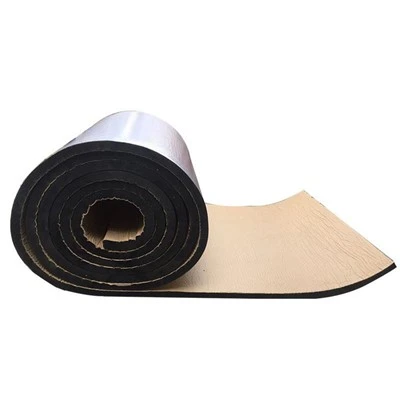
First, let’s ground this in what makes commercial insulation different from residential. When you’re insulating a home, the stakes are mostly keeping a family comfortable and trimming utility bills. For a commercial building? It’s a whole different ballgame: 24/7 occupancy for hospitals, 10+ floors of office workers with strict HVAC requirements, retail spaces that stay open until 10PM, and public spaces like schools or libraries that need to meet accessibility and safety rules. That means insulation has to do more than just stop air leaks—it has to handle constant temperature swings, meet fire codes that are non-negotiable, last for decades without failing, and even contribute to things like indoor air quality. Glass wool blanket checks every one of these boxes, and I’ve seen it prove that over and over.
Fire safety is the biggest non-negotiable for commercial builds, right? Most municipalities won’t even let a contractor step on site without proof their insulation is compliant with NFPA (National Fire Protection Association) standards, and specifically NFPA 701 for flame spread and smoke development in interior finishes. Glass wool blanket is made from molten glass spun into fine fibers, bonded with a non-combustible resin that doesn’t melt or release toxic fumes when exposed to heat. I worked on a 12-story office build in downtown Chicago a few years back where the local fire marshal rejected a competing mineral wool product because it released too much toxic smoke during small-scale testing, but our glass wool blanket passed with zero issues. The flame spread rating for our commercial-grade glass wool is usually between 15 and 25, which is way below the maximum 25 allowed for most interior wall and ceiling assemblies. That’s not just a number—it’s the difference between a fire that’s contained to one small area and one that can spread through the building’s cavities in minutes. And don’t let anyone tell you it’s too fragile for commercial structural cavities. Unlike loose-fill insulation that can shift or settle over time, glass wool blanket comes in rigid, uniform rolls that cut to fit perfectly between 16-inch or 24-inch on-center stud framing, so it stays in place for the life of the building. I’ve inspected 15-year-old office buildings where the glass wool blanket in the exterior wall cavities was still sitting exactly where it was installed, with no gaps, no settling, no loss of R-value.
Next up, thermal performance—and not just the R-value number on the packaging. Commercial buildings have massive HVAC loads, especially in climates with extreme heat or cold. A restaurant in Houston I worked with a few years ago was losing so much conditioned air through uninsulated wall cavities that their HVAC system was running 18 hours a day and still couldn’t keep the dining area at a comfortable 72 degrees. We added R-19 glass wool blanket to the exterior walls, and their utility bills dropped by 22% in the first quarter. Wait, but why glass wool instead of other insulation types? For starters, its R-value is consistent over time. Some foams or cellulose can degrade when exposed to moisture, which is a huge problem in commercial spaces that deal with humidity from commercial kitchens, laundry rooms, or just seasonal condensation. Glass wool is hydrophobic, meaning it repels water—it doesn’t absorb moisture, so its R-value doesn’t drop even in damp environments. I’ve seen a retrofit on a 40-year-old grocery store in Miami where the original fiberglass insulation had absorbed so much moisture from the bakery exhaust that its R-value was barely half of what it was supposed to be. We pulled out the old, saturated insulation and installed our moisture-resistant commercial glass wool blanket, and within six months, their HVAC usage dropped by 30%. That’s the kind of concrete impact commercial clients care about, not just vague “energy savings” promises.
Then there’s the acoustic performance, which is way more important for commercial spaces than most people realize. Think about a hospital where two patient rooms next to each other need to be quiet for recovery, or a corporate office where open workspaces can’t have phone calls echoing across the floor, or a school where classroom noise doesn’t bleed into the hallway or other rooms. Glass wool blanket is a natural sound absorber—its fine fibers trap sound waves and prevent them from traveling through wall or ceiling assemblies. I worked on a new elementary school in Seattle a couple of years ago where the architect specified R-13 glass wool blanket for interior walls. Before the build, the acoustical engineer did a test where they measured sound transfer between two classrooms with no insulation: a teacher speaking at a normal volume could be heard clearly in the next room 50 feet away. After installing the glass wool blanket, that same volume was barely detectable on the other side. That’s not a nice-to-have—it’s a requirement for schools to meet state acoustical codes for learning environments, and glass wool is one of the most cost-effective ways to hit that mark.
Wait, but let’s talk about the downsides I can’t sugarcoat, because as a supplier, my job isn’t to sell a perfect product—it’s to be honest about what works and what doesn’t. A common misconception is that glass wool is bad for indoor air quality because of the tiny fibers. That’s only a problem if it’s installed incorrectly or if the wrong type is used. Our commercial-grade glass wool blanket is wrapped in a vapor-permeable facing that’s approved by the EPA and meets indoor air quality standards like GREENGUARD Gold, which means it doesn’t release harmful VOCs (volatile organic compounds) into the air. We also train every contractor we work with on proper installation: wearing respiratory protection, sealing all gaps around electrical outlets, plumbing pipes, and ductwork, and making sure the facing is intact during installation so fibers don’t become airborne. I’ve had a few clients come to me with horror stories from old builds where cheap, un-faced glass wool was installed by untrained crews, leading to minor fiber irritation. But that’s not a flaw in the material—that’s a flaw in how it was installed and specified. When you work with a reputable supplier, you get product that’s tested for air quality, and clear guidance on installation to avoid those issues.
Another point: versatility. Commercial buildings aren’t one-size-fits-all, and glass wool blanket adapts to almost every application you can think of. Need to insulate the roof of a big-box retail store? We have heavy-duty glass wool blanket with a facer that can handle rooftop moisture and UV exposure for 25+ years. Need to insulate the ductwork in a hospital’s mechanical room? We have flame-retardant glass wool blanket that’s cut to fit straight onto duct surfaces, reducing air leakage from the HVAC system. Even for retrofits, which are a huge part of commercial construction now—older buildings that need to upgrade their energy efficiency without major structural changes—glass wool blanket is perfect. You can add it to existing wall cavities, or even use it as exterior insulation if you’re doing a facade retrofit, without tearing out entire sections of the building. I recently worked on a 30-year-old office tower in Atlanta where the owner wanted to cut their energy costs by 35% without doing a full gut renovation. We installed R-21 glass wool blanket into the exterior wall cavities (they were previously uninsulated) and added a layer of faced glass wool to the interior of the basement and attic, and they hit that 35% energy savings target in their first year.
So why do some contractors still hesitate to specify glass wool for commercial builds? I’ve asked that question a hundred times. Sometimes it’s outdated knowledge—they remember the cheap residential fiberglass from 20 years ago that was lower quality. Sometimes it’s because they’re not aware of the updated code standards that make glass wool the preferred option for many projects. A lot of new commercial projects are chasing LEED certification, and glass wool is eligible for LEED points because it’s made from recycled glass (we use 40% post-consumer recycled glass in our commercial products) and it’s highly recyclable at the end of a building’s life. That’s a big selling point for developers looking to hit sustainability targets.
Let me wrap this up by talking about what this all means for you, as someone specifying a commercial building project. Glass wool blanket isn’t just a residential insulation—it’s a proven, code-compliant, cost-effective solution for every type of commercial space, from small retail shops to multi-floor office towers, hospitals, and schools. It handles fire safety, thermal performance, acoustics, moisture, and even sustainability, all while being easy to install and long-lasting.
If you’re working on a new build or a retrofit and are tired of insulation that underperforms, or you’re unsure about which product will meet your specific commercial needs, I’m here to help. As a glass wool blanket supplier who’s worked exclusively in commercial construction for over a decade, I don’t just sell material—I can walk you through code requirements, help you calculate the right R-value for your climate and building type, and connect you with trusted contractors in your area who know how to install our product correctly.
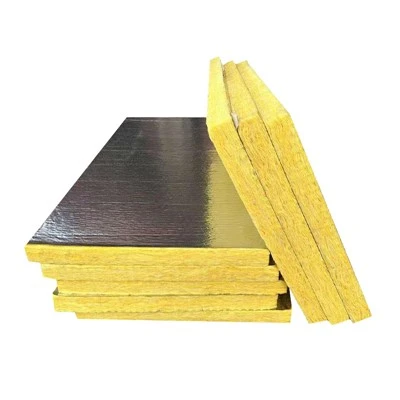
Don’t let outdated myths or confusing product options derail your project. Glass wool blanket is a tried-and-true solution for commercial buildings, and it might be exactly what you need to hit your energy, safety, and comfort goals. Reach out to discuss your project details and get a customized quote tailored to your needs.
Custom Molded Rubber Components References
- National Fire Protection Association (NFPA). NFPA 701: Standard Methods of Fire Tests for Flame Propagation of Textiles and Films. Quincy, MA: NFPA, 2022.
- U.S. Department of Energy (DOE). Commercial Building Insulation Guide. Washington, D.C.: U.S. Department of Energy, 2021.
- Underwriters Laboratories (UL). UL 723: Standard for Test for Surface Burning Characteristics of Building Materials. Northbrook, IL: UL, 2020.
- GREENGUARD Environmental Institute. GREENGUARD Gold Certification Requirements. Ann Arbor, MI: GREENGUARD, 2023.
- U.S. Environmental Protection Agency (EPA). Recycled Content Standards for Building Materials. Washington, D.C.: EPA, 2022.
Langfang Aolesi Thermal Insulation Materials Co., Ltd.
As one of the most professional glass wool blanket manufacturers and suppliers in China, we also support customized service. Please feel free to buy bulk high quality glass wool blanket made in China here from our factory. For pricelist, contact us now.
Address: Dongwang Village, Dacheng County, Langfang City, Hebei Province
E-mail: Lfaolesibaowen@outlook.com
WebSite: https://www.lfaolesi.com/
