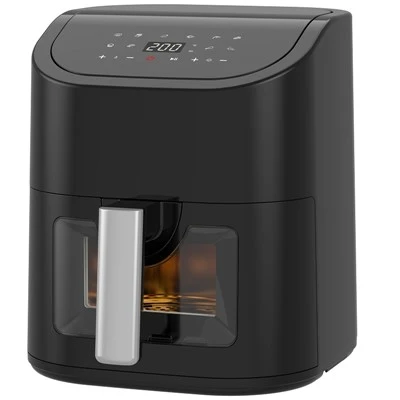
If you’ve scrolled through kitchen gadget reviews or modern cooking content lately, you’ve likely spotted a trend: glass air fryers popping up on countertops everywhere. As a supplier of glass air fryers, I’ve spent the last three years answering the same question from home cooks and small cafe owners alike: “Are these safe? Aren’t plastics or non-stick coatings leaching into my food?” It’s a fair question—after all, many of us have grown wary of hidden chemicals in cookware, and air fryers are designed to circulate hot air (often up to 400°F) around food to replicate frying with less oil. But let’s cut through the noise, separate marketing hype from actual science, and explain where glass air fryers stand on toxicity, plus what sets our products apart for anyone looking to source reliable, safe options. Glass Air Fryer
First, let’s ground this in what makes a material toxic in cookware. A material is only toxic if it leaches harmful compounds into food or releases fumes during high heat, and two common culprits in air fryers are plastic components and non-stick coatings. Traditional air fryers often use plastic for the exterior housing, the basket handle, or even small parts of the interior lid, and low-quality plastics can leach bisphenol A (BPA) or phthalates when exposed to high heat. Non-stick coatings, like Teflon, are made with polytetrafluoroethylene (PTFE), and at temperatures above 500°F, they can break down into toxic fumes that cause flu-like symptoms, sometimes called “polymer fume fever.” Even below that threshold, some studies have linked long-term exposure to PFOA, a once-common processing agent for non-stick coatings, though most major brands phased out PFOA by 2015.
Glass, on the other hand, is a material that’s been used in cookware for centuries for a reason. It’s inert, meaning it doesn’t react with food, oils, or acids, even at extreme temperatures. Borosilicate glass, the type we use for our glass air fryer baskets and chambers, is designed to withstand thermal shock—so you can go from heating it in an oven to putting it on a counter without it cracking. It doesn’t leach any chemicals, even when exposed to 400°F hot air, and it’s fully recyclable, which is a bonus for eco-conscious buyers. But wait—no material is perfect, so it’s important to address the two most common myths about glass air fryers when people ask about toxicity.
The first myth: Glass shatters easily. I’ve heard this from customers every month, and it’s true that regular glass can break if dropped or subjected to sudden temperature changes. But our glass air fryers use tempered borosilicate glass, which goes through a special heating and cooling process that makes it up to five times stronger than regular glass. We test every unit to ensure it can withstand impacts and extreme heat fluctuations—for example, we run 1,000 heat cycles where we heat the chamber to 400°F then immediately spray it with cold water, and only units that pass that are approved for sale. We also include a silicone lid that fits tightly over the glass chamber, and a thick, non-slip base, to add an extra layer of protection for home cooks.
The second myth: The metal parts in glass air fryers are toxic. It’s easy to overlook non-glass components, but our units use food-grade stainless steel for the heating element and the interior support frame, and BPA-free silicone for the handle and seals. We source our metal parts from suppliers that follow FDA food safety standards, so they don’t leach chromium or nickel into food—two metals that can become a concern if cheap, low-grade metal is used. Unlike some cheap air fryers that use aluminum parts, stainless steel is stable at high heat and doesn’t react with anything you cook, from tomato-based dishes to frozen fries.
Of course, not all glass air fryers are created equal. That’s where the confusion around toxicity comes from—many no-name brands sell cheap glass air fryers made with low-grade glass, metal parts, or even hidden plastic components. For example, some brands label their product as “glass” but use a thin, non-tempered glass that can crack at high heat, or use plastic hinges that can melt over time. We get inquiries from buyers all the time who have bought a $50 glass air fryer from a big-box store and had it crack after a month, or noticed a weird plastic smell after a few uses. That’s not a flaw with glass itself—it’s a flaw with cheap manufacturing.
To test whether a glass air fryer is truly non-toxic, there are a few key things to look for. First, check if it’s labeled as borosilicate glass and tempered. Second, confirm that all non-glass parts are food-grade: stainless steel for metal, BPA-free silicone, no non-stick coatings on the interior. Third, look for third-party certifications, like FDA approval or LFGB compliance (the European equivalent, which tests for chemical leaching). Our glass air fryers are tested by independent labs to ensure they meet both FDA and LFGB standards, and we post the test results on our website for any buyer to review.
Another point that comes up a lot: what about when you clean a glass air fryer? Because glass is non-porous, it’s actually easier to clean than non-stick air fryers, which means less risk of food residue building up and releasing fumes over time. You can put our glass baskets in the dishwasher, or just wipe them with a soapy cloth, and there’s no risk of scratching a non-stick coating that can then flake off into food. We’ve even had customers tell us that their glass air fryer still looks new after two years, whereas their old non-stick air fryer was scratched and starting to peel within a year.
Now, I’m not going to claim that glass air fryers are 100% risk-free. No kitchen appliance is, including stainless steel or cast iron air fryers. For example, if you heat empty air fryer for more than 10 minutes, even glass, can reach extremely high temperatures, and the silicone seals could degrade over time. But that’s true for any air fryer, regardless of material—you should never run an air fryer empty. The key difference is that in our glass air fryers, if you do accidentally leave it on empty, the only risk is that the silicone handle might get warm, not that toxic fumes will be released like with a non-stick or plastic air fryer.
As a supplier, our priority is to give buyers a transparent, safe alternative to traditional air fryers. We work with small restaurants and home cooks who are tired of choosing between convenience and safety, and we’ve found that glass air fryers are perfect for everything from roasting vegetables to cooking chicken wings, even baking small cakes. One of our regular customers is a bakery that uses our glass air fryers to make mini donuts, because the glass lets them see when the donuts are golden brown, and they don’t have to worry about any chemicals leaching into their baked goods.
If you’re in the market for a glass air fryer and wondering about toxicity, I hope this clears up some of the confusion. The short answer is: high-quality, tempered borosilicate glass air fryers with food-grade components are non-toxic and a safe choice for your kitchen. The key is to avoid cheap, untested units that cut corners on materials.
I invite any retailer, restaurant owner, or bulk buyer interested in sourcing glass air fryers to reach out to us to discuss your needs, request product samples, or review our third-party safety test results. We’re committed to making transparent, safe cookware that you can trust, and we’d love to partner with you.
Glass Air Fryer References
- U.S. Food and Drug Administration. (2023). Food Contact Materials: Glass, Ceramics, and Enamel.
- European Food Safety Authority. (2022). Evaluation of Chemical Leaching from Kitchen Appliance Materials.
- International Organization for Standardization. (2021). ISO 4531:2021, Glass for Cooking and Serving – General Test Methods.
- Journal of Food Protection. (2020). Thermal Stability of Non-Stick Coatings and Emission of Per- and Polyfluoroalkyl Substances (PFAS) at Cooking Temperatures.
- Consumer Reports. (2023). Air Fryer Safety: What You Need to Know to Avoid Toxins and Fumes.
Guangdong Qiaokang Electrical Appliances Co., Ltd.
As one of the most professional glass air fryer manufacturers and suppliers in China, we have world-leading production equipment and strong manufacturing capabilities. Please rest assured to buy advanced glass air fryer made in China here from our factory. Customized orders are welcome.
Address: No.18, Jinxiang Road, Sanjiao Town, Zhongshan City, Guangdong Province
E-mail: sales01@gdboling.com
WebSite: https://www.qiaokanghome.com/
