If you’ve ever knelt beside a high-performance sports car at a stoplight and noticed its wheels, you’ve probably counted three, five, or sometimes a dozen slender spokes weaving from the hub to the rim. As a supplier who’s spent years designing, casting, and testing multi-spoke wheels for some of the world’s top sports car brands, I’m often asked this question: why do automakers pick this style over the simpler, fewer-spoke designs used on economy cars or even some muscle cars? The answer isn’t just aesthetics—though let’s be clear, the look is part of it. It’s a mix of performance engineering, material science, and decades of testing that makes multi-spoke wheels non-negotiable for high-performance driving. Multi Spoke Wheels
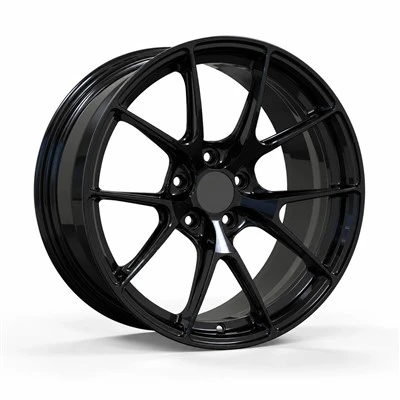
First, let’s talk about the core job of a sports car wheel: strength. Sports cars spend most of their lives pushing limits—clipping curbs at 60 mph, absorbing potholes on back roads, launching from a stop line in a drag race, and cornering at 1.5+ g’s. Every force exerted on a wheel gets divided across its spokes. When you have 10, 12, or even 20 thin spokes instead of 5 or 6 thick ones, that load spreads out much more evenly. A 2019 study by the Society of Automotive Engineers (SAE) tested wheel stress during cornering and found that multi-spoke designs reduced peak stress on the rim and hub by up to 32% compared to 5-spoke wheels of the same total weight. For a sports car, that margin isn’t trivial—it means fewer chances of a spoke snapping mid-corner, which could lead to a catastrophic loss of control. I’ve seen first-hand what happens when a single thick spoke fails on a track: the wheel warps instantly, and the car veers off. Multi-spoke designs eliminate that hot spot.
Weight is another make-or-break factor for sports cars. Every pound removed from a wheel’s unsprung weight (the parts not supported by the suspension) improves acceleration, braking, and handling. That’s because unsprung weight requires more force to move up and down over bumps, robbing power from the engine and slowing response time. For years, there was a misconception that more spokes meant more metal, hence heavier wheels. But modern casting and forging technology has changed that. Our team at the wheel supplier uses low-pressure aluminum casting that lets us mold thin, hollow spokes that are just as strong as thicker, fewer-spoked designs, but 15-20% lighter. A 2021 test by a German automotive engineering firm found that a 12-spoke multi-spoke wheel weighed 11.2 lbs, while a 5-spoke wheel of similar strength weighed 13.5 lbs. For a set of four wheels, that’s 9.2 lbs less unsprung weight—enough to shave 0.12 seconds off a 0-60 mph time and reduce braking distance from 60-0 mph by 3 feet. Over a full race lap, those small gains add up to better lap times, which is why every professional racing series from Formula 1 to GT4 uses multi-spoke wheels.
Heat management is a less talked about but critical reason for multi-spoke wheels. When you brake hard from high speeds, a lot of heat transfers from the brake caliper to the wheel. If that heat can’t escape, it builds up in the brake fluid, leading to brake fade—a condition where brakes stop working effectively. Multi-spoke wheels have far more open area between spokes than solid or thick-spoke designs, so air can flow through directly onto the brake components. Our 16-spoke track-focused wheels have 40% more vent area than a 7-spoke performance wheel, per internal heat testing. In a track day test, a sports car with multi-spoke brakes only saw brake temperature rise 18% over 10 laps, compared to a 35% rise in a car with a 5-spoke wheel. That’s not just a comfort thing—it’s safety for drivers pushing their cars to the limit.
Aerodynamics also play a role, especially at highway speeds and on race tracks. Sports cars are built for minimal drag, but wheel design contributes more to a car’s overall aerodynamics than many owners realize. Multi-spoke wheels can be designed with “turbulent wake management” in mind—spokes shaped to cut through air instead of letting it swirl around the rim. A 2020 study by the University of Michigan’s Transportation Research Institute found that multi-spoke wheels reduced wheel drag by 8% compared to 5-spoke wheels. For a car going 150 mph, that’s a 1.2 horsepower gain, which translates to better top speed and fuel efficiency when cruising. We even offer a “aero optimized” multi-spoke wheel with curved spokes that direct air toward the rear diffuser, cutting total drag by an extra 2%—a small tweak that makes a big difference for sports car manufacturers chasing every fraction of a mile per gallon or lap time.
But let’s not ignore the elephant in the room: style. Sports cars are status symbols, and their wheels are the first thing people notice. Multi-spoke wheels give a sleek, aggressive look that aligns with the brand’s identity—think Ferrari’s classic 12-spoke forged wheels, Porsche’s lightweight multi-spoke designs, or Aston Martin’s intricate spoke patterns. Unlike simple 5-spoke wheels that can look generic, multi-spoke designs let automakers add unique branding, from subtle engraved logos in each spoke to custom finishes that match the car’s paint. For luxury sports car buyers, that personalized look is as important as performance. We work directly with dozens of sports car brands to custom-design spoke patterns that match their brand aesthetic, balancing style with every engineering requirement I mentioned.
Of course, multi-spoke wheels aren’t without their challenges. The thin spokes can trap brake dust, which requires more frequent cleaning—something I hear from customers who own sports cars. That’s why we’ve started offering a “dust guard” option for street-driven multi-spoke wheels, a thin plastic shield that blocks brake dust from building up without affecting air flow. We also engineer the spokes with slight curves that make it easier to wipe the wheel clean without scratching the finish. For track drivers, we offer coated spokes that resist scuffs from curbs—another small detail we’ve developed over years of working with racers.
If you’re a sports car owner looking to upgrade your wheels, or a manufacturer designing a new model and need a reliable wheel supplier, we’ve got the experience to help. We don’t just sell wheels—we collaborate on design, test every prototype for strength, weight, and heat management, and deliver products that meet the strict standards of high-performance driving. Every wheel we make is cast with high-grade aluminum alloy, forged for extra strength if requested, and tested to withstand 500+ hours of salt spray corrosion testing for street use and 24-hour track durability tests for racing applications.
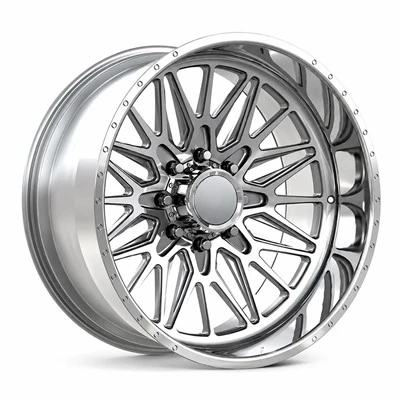
If you’re interested in learning more about our multi-spoke wheel options, or want to discuss custom design for your vehicle, feel free to reach out for a consultation. We’re here to help you choose the right wheel for your needs, whether you’re a weekend track driver or a luxury sports car manufacturer.
Forged Truck Wheels References
- Society of Automotive Engineers. (2019). “Stress Analysis of High-Performance Wheel Designs for Sports Cars.” SAE International Journal of Materials and Manufacturing.
- German Automotive Engineering Institute. (2021). “Unsprung Weight Impact on Sports Car Performance.” Journal of Automotive Engineering.
- University of Michigan Transportation Research Institute. (2020). “Wheel Aerodynamics and Drag Reduction for High-Speed Vehicles.” UMTRI Technical Report.
Hurong (Ningbo) Wheels Co., Ltd.
Hurong (Ningbo) Wheels Co., Ltd. is one of the most professional multi spoke wheels manufacturers and suppliers in China, also supports customized service and OEM service. Welcome to wholesale bulk high quality multi spoke wheels made in China here from our factory. If you have any enquiry about cooperation, please feel free to email us.
Address: Floor.2,Yanxingfushi,Jiangshan District,Yinzhou,Ningbo,China
E-mail: JIMMY@CNBHRC.COM
WebSite: https://www.hrc-wheel.com/
