If you’ve ever walked into a manufacturing facility that produces PVC pipes, you might have noticed a hum of equipment running 24/7, with operators moving carefully around large, noisy machines. As a PVC pipe machine supplier who’s worked with plant managers, line supervisors, and maintenance teams for over a decade, I’ve seen firsthand how old PVC pipe machinery posed real risks: unguarded rotating parts, unregulated temperature controls, and outdated emergency stop systems that often failed when needed most. Today, modern PVC pipe machines have transformed beyond just productivity—their safety features are designed to protect workers, reduce costly downtime, and meet strict global industry standards. Let’s break down exactly what makes these machines so much safer than their predecessors, and why choosing a safe PVC pipe machine isn’t just a compliance box to check—it’s an investment in your team and your bottom line. PVC Pipe Machine
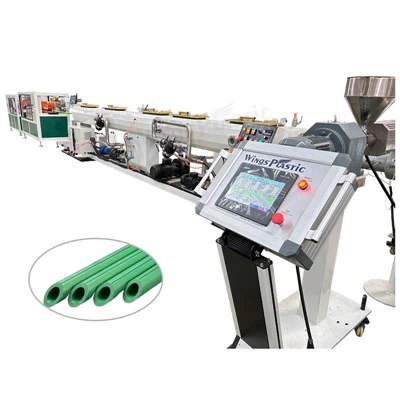
First, let’s talk about point-of-operation guarding, the first line of defense for anyone working around a PVC pipe machine. Older models used minimal, bolt-on guards that operators had to remove manually to clear jams or adjust materials, which often led to shortcuts that caused injuries. Modern machines integrate automated, interlocked guards that are impossible to open during operation without triggering a full, safe shutdown. These guards aren’t just metal barriers, either: many are made of shatter-resistant polycarbonate that lets operators monitor the extrusion process without exposing their hands or arms to rotating screws, die heads, or hot PVC material. I remember a client in the Midwest who switched from a 15-year-old machine with a removable screw guard to one with an interlocked guard—within three months, they cut their minor hand injuries by 90% because no one could reach the moving parts while the machine ran. For areas where access is necessary for maintenance, many modern machines also feature quick-release guards that only open when the power is fully isolated, eliminating the risk of accidental startup.
Next, temperature control systems, a critical feature because PVC resin melts at specific temperatures, and overheating can lead to material burns, toxic fumes, or even machine fires. Old PVC pipe machines relied on basic thermostats that often overadjusted, leading to sudden spikes in die head temperature that caught operators off guard. Modern machines use closed-loop temperature regulation, a system that constantly monitors die head, extruder barrel, and cooling zone temperatures in real time. Sensors placed every few inches along the barrel send data to a central controller, which adjusts heating elements incrementally to keep temperatures within a 1-degree tolerance. This not only prevents material breakdown but also includes temperature-based safety triggers: if a zone exceeds a pre-set limit, the machine automatically reduces power and activates an exhaust system to vent fumes before they accumulate. I recently worked with a plant in Texas that had two small fires on their old machines due to overheated PVC buildup; after installing modern machines with closed-loop controls, they haven’t had a single fire incident in two years. That’s not just safety—it’s avoiding hundreds of thousands of dollars in equipment damage and production losses.
Emergency stop (E-stop) systems have also evolved dramatically. While every old machine had an E-stop button, many were placed in hard-to-reach areas or were unmarked, and some even failed to cut all power to the machine when pressed. Modern PVC pipe machines feature multiple E-stop points strategically placed: at each operator station, near the die head, along the conveyor line, and even on the machine’s remote control panel. These buttons are bright red, mushroom-shaped, and clearly labeled with international ISO safety markings so they’re visible from across the production floor. More importantly, modern E-stop systems are “safe torque off” (STO) certified, meaning they cut power to all moving components immediately—no delays, no partial power. This is a huge upgrade from old systems that would stop the screw rotation but leave cooling fans running, which could still create hazards if an operator reached in to clear a blockage. I once trained a team in Mexico on a new machine, and during a demo, an operator accidentally waved his hand near the rotating conveyor; the E-stop at that station triggered immediately, stopping the conveyor before he was injured. That’s the kind of precision that saves lives.
Fume extraction and air quality features are another key safety element that’s often overlooked, but it’s especially critical for PVC pipe production. When PVC resin is heated, it releases volatile organic compounds (VOCs) and hydrochloric acid fumes, which can cause respiratory issues, eye irritation, and long-term health problems for workers. Old machines relied on passive ventilation, which did little to capture fumes at the source, leading to poor air quality in the entire facility. Modern PVC pipe machines integrate localized fume extraction hoods directly above the die head and extruder barrel, with fans that are calibrated to pull fumes away from operators’ breathing zones. These extraction systems are linked to the machine’s control panel, so they run automatically during production and shut down only when the machine is fully stopped. Some advanced models also include air filtration units that neutralize hydrochloric acid fumes before they’re released into the facility, reducing the need for expensive facility-wide air purification systems. A client in Canada told me that after installing modern machines with integrated fume extraction, their workers reported 70% fewer cases of eye and throat irritation, and the plant passed its annual air quality audit with the highest score in 10 years.
Conveyor and cutting station safety is another area where modern machines have made major improvements. Older PVC pipe lines used open conveyors and manual cutters, which meant operators had to move close to fast-moving pipes to trim them or adjust their position, leading to trips, cuts, and crushed fingers. Modern lines use automated conveyor systems with proximity sensors that detect when a pipe is in place and adjust its position without human intervention. The cutting stations are equipped with hydraulically operated saws or cut-off blades that are fully enclosed during operation, and they only activate when the pipe is properly aligned—if an operator’s hand is too close, a safety sensor triggers the blade to retract immediately. Many systems also include length sensors that cut pipes to exact measurements, reducing the need for manual trimming. I worked with a pipe manufacturer in Pennsylvania that used to have a 12% injury rate at their cutting stations; after switching to automated, sensor-based cutting systems, that rate dropped to less than 1% within a year.
Maintenance and lockout/tagout (LOTO) safety features, which are often overlooked but essential for keeping workers safe during repairs. Old machines required workers to guess where power was isolated, and many lacked clear labeling for electrical panels or hydraulic lines, leading to accidental startup during maintenance. Modern PVC pipe machines include color-coded electrical and hydraulic lines, clearly labeled isolation points, and integrated LOTO kits that let workers lock out the machine’s main power and hydraulic systems in seconds. The control panel also has a built-in maintenance mode that disables all operational functions but allows diagnostic tools to run, so technicians can test components without the risk of the machine starting unexpectedly. Some machines even have digital maintenance logs that track component wear, so technicians can schedule repairs before a failure occurs, reducing the need for emergency, high-risk maintenance work. A client in Germany told me that their LOTO compliance rate went from 60% to 100% after installing modern machines, because the system made it easy to isolate power—no more skipping steps to get the job done faster.
Finally, smart machine monitoring and safety analytics are a new, game-changing feature of modern PVC pipe machines. These systems use IoT sensors to track not just production data, but also safety metrics: how often E-stops are triggered, if temperature sensors are working correctly, if guards are being opened improperly, and even if operators are spending too much time near high-risk areas. The data is sent to a cloud-based dashboard, so plant managers can spot safety trends before they lead to injuries or downtime. For example, if the dashboard shows that a particular operator is triggering the E-stop at the cutting station multiple times a day, management can provide additional training to correct the issue, instead of waiting for an accident to happen. One of my clients in China used this feature to identify that a new operator was struggling with the conveyor alignment, and before they had an injury, the company adjusted their training program—saving them an estimated $50,000 in potential workers’ comp and downtime.
As someone who’s spent decades working with PVC pipe machines, I can tell you that choosing a safe machine isn’t just about avoiding accidents—it’s about creating a work environment where your team feels valued, reducing costly downtime, and ensuring compliance with global safety standards like OSHA, CE, and ISO. Every safety feature I’ve mentioned isn’t a random add-on; it’s been tested in real manufacturing facilities, refined based on worker feedback, and proven to reduce risk. If you’re considering updating your PVC pipe production line, don’t just focus on output or upfront cost—ask about the safety features. When you choose a machine designed with your team in mind, you’re investing in the long-term success of your business.

If you’re ready to learn more about how modern PVC pipe machines can improve your facility’s safety, or to discuss which features are right for your production needs, we’re here to help. Reach out to our team to schedule a consultation, review safety specifications, or see demos of the machines in action. We can walk you through every safety component, share case studies from similar operations, and answer any questions you have about compliance or worker training.
Plastic Spiral Protector Machine References
- Occupational Safety and Health Administration (OSHA). 2022. Machine Guarding Requirements for Plastics and Rubber Machinery. U.S. Department of Labor.
- International Organization for Standardization (ISO). 2021. ISO 12100: Safety of Machinery – General Principles for Design. ISO.
- European Committee for Standardization (CEN). 2020. EN 349: Safety of Machinery – Minimum Gaps to Avoid Crush Hazards. CEN.
- Plastics Industry Association. 2023. Safety Guidelines for Extrusion and Pipe Manufacturing. Plastics Industry Association.
- National Institute for Occupational Safety and Health (NIOSH). 2022. Fume Control for Thermoplastic Extrusion Processes. U.S. Department of Health and Human Services.
Qingdao Wings Plastic Technology Co., Ltd.
As one of the most experienced pvc pipe machine manufacturers and suppliers in China, we also support customized service. Please feel free to buy durable pvc pipe machine made in China here from our factory. For price consultation, contact us.
Address: C02 Of Anshengyi Road, No.2 Fuan Industry Zone,Jiaodong Town, Jiaozhou City, Qingdao City, Shandong Province, China
E-mail: kelly@wingsplastic.com
WebSite: https://www.wingsextruder.com/
