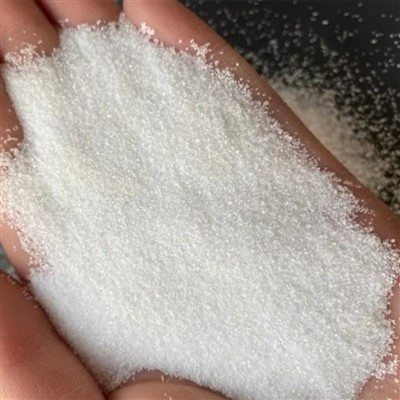
Calcium carbonate powder is a widely used industrial material. As a supplier of calcium carbonate powder, understanding its electrical properties is crucial for promoting our products and meeting the diverse needs of our customers. In this article, I will delve into the electrical properties of calcium carbonate powder, exploring its conductivity, dielectric properties, and their applications. Calcium Carbonate Powder
1. Conductivity of Calcium Carbonate Powder
1.1 Intrinsic Conductivity
Calcium carbonate (CaCO₃) is essentially an insulator under normal conditions. In its pure form, it has very low electrical conductivity. This is because calcium carbonate is an ionic compound, but at room temperature, the ions are held in a fixed lattice structure within the crystal. The movement of charge carriers, which is necessary for electrical conduction, is highly restricted in this solid – state arrangement.
The crystal structure of calcium carbonate exists in different polymorphs, such as calcite, aragonite, and vaterite. Calcite is the most stable and common form. The strong ionic bonds between calcium (Ca²⁺) and carbonate (CO₃²⁻) ions in these structures prevent the free movement of electrons or ions, resulting in a high electrical resistance.
1.2 Factors Affecting Conductivity
However, the conductivity of calcium carbonate powder can be influenced by several factors. One of the key factors is moisture content. When calcium carbonate powder is exposed to a humid environment, water molecules can adsorb on the surface of the powder particles. Water can act as a medium for ion conduction. The dissolved carbon dioxide in water can react with calcium carbonate to form calcium bicarbonate (Ca(HCO₃)₂), which dissociates into ions. These ions can then move through the water film on the particle surface, increasing the electrical conductivity of the powder.
Another factor is the presence of impurities. Some impurities, such as metal ions (e.g., iron, copper), can introduce additional charge carriers. These metal ions can donate or accept electrons more easily than the ions in calcium carbonate itself. As a result, the presence of even small amounts of these impurities can significantly increase the electrical conductivity of the powder.
The particle size of calcium carbonate powder also has an impact on its conductivity. Smaller particles have a larger surface – to – volume ratio. This means that there is more surface area available for adsorption of moisture or impurities, which can enhance the conductivity. For example, in a fine – grained calcium carbonate powder, the probability of forming continuous conductive paths through adsorbed moisture or impurity films is higher compared to a coarse – grained powder.
2. Dielectric Properties of Calcium Carbonate Powder
2.1 Dielectric Constant
The dielectric constant (also known as relative permittivity) is a measure of a material’s ability to store electrical energy in an electric field. Calcium carbonate powder has a relatively low dielectric constant compared to some other dielectric materials. The dielectric constant of calcium carbonate depends on factors such as its crystal structure, frequency of the applied electric field, and temperature.
In calcite, the dielectric constant is anisotropic, meaning it has different values in different crystal directions. At low frequencies (e.g., in the radio – frequency range), the dielectric constant of calcite can range from about 7 to 9, depending on the orientation of the crystal. As the frequency of the applied electric field increases, the dielectric constant of calcium carbonate generally decreases. This is because at high frequencies, the dipoles in the material do not have enough time to align with the rapidly changing electric field.
2.2 Dielectric Loss
Dielectric loss refers to the dissipation of electrical energy in a dielectric material when it is subjected to an alternating electric field. In calcium carbonate powder, the dielectric loss is relatively low. The main sources of dielectric loss in calcium carbonate are the movement of ions and the relaxation of dipoles.
At low frequencies, the movement of ions (such as the small amount of mobile ions due to impurities or adsorbed moisture) can cause some dielectric loss. As the frequency increases, the relaxation of dipoles becomes more significant. However, since calcium carbonate has relatively stable ionic bonds and a low dipole moment, the overall dielectric loss remains small.
3. Applications Based on Electrical Properties
3.1 Electrical Insulation
Due to its low conductivity and relatively low dielectric loss, calcium carbonate powder is widely used as an electrical insulating material. It can be added to polymers to improve their insulation properties. For example, in the production of electrical cables, calcium carbonate – filled polymers can be used as insulation layers. The calcium carbonate powder acts as a filler, increasing the volume resistivity of the polymer and reducing the risk of electrical leakage.
3.2 Capacitor Applications
Although calcium carbonate does not have a very high dielectric constant, it can still be used in some capacitor applications. In some low – cost and low – performance capacitors, calcium carbonate – based dielectric materials can be employed. The relatively low dielectric loss of calcium carbonate ensures that the energy dissipation in the capacitor is minimized, improving its efficiency.
4. Quality Control and Product Customization
As a calcium carbonate powder supplier, we pay great attention to the electrical properties of our products. We conduct strict quality control measures to ensure the consistency of the electrical properties of our calcium carbonate powder.
We use advanced analytical techniques to measure the conductivity and dielectric properties of our products. For example, we use impedance spectroscopy to measure the dielectric constant and dielectric loss at different frequencies. We also control the moisture content of our products during the production and packaging processes to maintain stable electrical properties.
In addition, we can customize our products according to the specific requirements of our customers. If a customer needs calcium carbonate powder with a certain level of conductivity or dielectric constant, we can adjust the production process, such as controlling the particle size, purifying the raw materials, or adding specific additives.
5. Conclusion and Call to Action
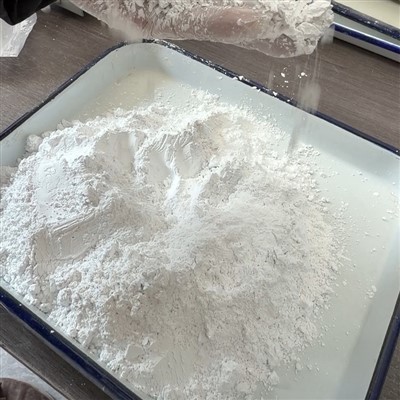
In conclusion, the electrical properties of calcium carbonate powder, including its low conductivity and specific dielectric properties, make it a valuable material in various electrical applications. As a reliable calcium carbonate powder supplier, we are committed to providing high – quality products with consistent electrical properties.
Dolomite Powder Whether you are in the electrical insulation industry, capacitor manufacturing, or other related fields, our calcium carbonate powder can meet your needs. If you are interested in our products or want to discuss your specific requirements, please feel free to contact us. We look forward to establishing a long – term business relationship with you and working together to achieve mutual success.
References
- Handbook of Chemistry and Physics. CRC Press.
- "Electrical Properties of Inorganic Compounds" by various authors in the Journal of Materials Science.
- "Dielectric Behavior of Calcium Carbonate – Filled Polymers" by researchers in Polymer Engineering and Science.
Chaohu Jirun Energy Conservation and Environmental Protection Technology Co., Ltd.
We’re well-known as one of the leading calcium carbonate powder manufacturers and suppliers in China, also support customized service. Welcome to wholesale high quality calcium carbonate powder in stock here from our factory. If you have any enquiry about pricelist, please feel free to email us.
Address: No. 9, north of the intersection of Weihai Road and Weili Avenue, within the industrial park of Yinping Town, Chaohu City, Hefei City, Anhui Province.
E-mail: 13305654485@163.com
WebSite: https://www.chaohujirun.com/
