If you’ve ever walked through a large machine shop handling industrial parts the size of a small car or heavier than a truck, you’ve probably glimpsed the work of a vertical lathe. As a vertical lathe supplier, I get asked this question all the time: how does this massive, standing machine actually turn raw metal into precise, finished parts? It’s not just about size—its vertical orientation is the secret to what makes it ideal for the heavy, awkward work that horizontal lathes can’t handle. Let me break down how a vertical lathe works, straight from the shop floor and the years I’ve spent supporting these machines in workshops around the country. Vertical Lathe
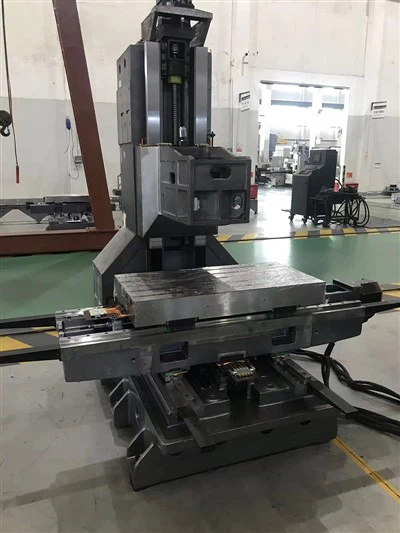
First, let’s clear up the basic design that makes a vertical lathe (often called a VTL for short) different from its horizontal counterpart. A traditional horizontal lathe lays its spindle on its side, spinning a workpiece clamped to a horizontal axis. A VTL stands straight up, with its main spindle mounted vertically, holding the workpiece on a circular table that spins parallel to the floor. That table isn’t just a flat disk—most of our VTL models come with a rugged, clamped holding mechanism, often with adjustable jaws or a faceplate, that can lock workpieces in place so they don’t shift under the force of cutting tools. For context, these tables can range in size from 3 feet across for small utility parts to 40 feet or more for parts like wind turbine hubs or mining mill shells. That vertical orientation isn’t a gimmick—it solves two huge problems with horizontal lathes when dealing with large, heavy workpieces. If you’ve ever tried to balance a 20,000-pound metal disk on a horizontal axis, you’ll know it sags under its own weight, throwing off alignment and making cuts imprecise. A vertical setup lets that same part hang straight, so gravity pulls it against the table, creating a stable, even hold without that unwanted sag.
Now let’s walk through the working principle step by step, like we’re setting up a job on one of our 20-foot VTLs last month. First step: workholding. We always stress that proper setup is half the battle, and VTL workholding is critical. The operator will place the raw part—say, a cast iron gear housing for a construction truck—onto the rotating table, then engage the adjustable jaws or a vacuum clamp (we offer both mechanical and hydraulic clamping systems depending on the workpiece material and weight) to lock it down. No play, no shifting—even at high spin speeds, this is non-negotiable. Once the part is secured, the next core component kicks in: the main spindle drive. This is the heart of the machine, responsible for spinning the table (and the workpiece) at a precise, controlled speed. Modern VTLs use AC servo drives or variable-frequency drives, not the old belt-driven systems of the past, because they let operators adjust spin speed on the fly based on the material being cut, the depth of the cut, and the tool being used. For example, we ran a job on a steel turbine housing last quarter where we spun the table at just 20 RPM for rough cuts to remove thick layers of material, then bumped it up to 120 RPM for finishing cuts to get a smooth, precise surface. That spin speed is tied directly to the material’s cutting speed, a formula our operators memorize, but the VTL’s drive makes it easy to dial in without manual adjustments.
Next comes the cutting system, which is where most people see the VTL in action. Mounted to a stationary column that runs along the back of the VTL’s base, the cutting tool—whether a single-point turning tool, a boring bar, or a face mill—moves horizontally and vertically along two axes (X and Z, in machining terms). Some of our larger VTL models even have a third axis for tools, letting operators switch between cutting tools without stopping the job. Here’s where the vertical setup shines again: because the workpiece is standing upright, the cutting tool is working on the part from the side, or even from above or below if needed. For large parts that would be impossible to fit into a horizontal lathe, this gives operators unobstructed access to every surface. For example, a 15-foot diameter mill shell for a gold mine would sit on the VTL’s table, and the tool can machine the inner bore, the outer edge, and even the bolt holes around the circumference all in one setup, without having to rotate the entire heavy part to reach different sides. That cuts down on setup time, reduces alignment errors, and is the reason we’ve sold VTLs to mining operations for decades.
Wait, but what about the cutting force? When a tool is pressing into metal at high speed, there’s a lot of torque and vibration, right? That’s where the VTL’s rigid construction comes in. Our machines are built with heavy cast iron bases and columns that absorb vibration, so the cut stays consistent. Unlike a horizontal lathe where the weight of the workpiece pulls downward on the spindle, a VTL’s workpiece is supported from below by the table, so all the cutting force is directed downward into the table, not sideways into the machine frame. That makes for more stable cuts, especially on thick, hard materials like stainless steel or titanium. I remember a customer called us last year panicking because their horizontal lathe was vibrating so badly when cutting a titanium aerospace part that the surface finish was unusable. We sent a service technician to swap in one of our 10-foot VTLs, and the same job ran perfectly on the first try, no vibration at all. That’s the real-world benefit of the vertical working principle.
Let’s not forget the finishing and quality control part, because that’s what makes a VTL more than just a big metal bender. After the roughing cuts remove most of the excess material, finishing cuts are made at slower, more precise speeds to get tight tolerances—often within a few thousandths of an inch, which is critical for parts that need to fit together perfectly, like turbine components or engine blocks. Some of our VTLs come equipped with in-process measurement probes that touch the part after each cut, check the dimensions, and adjust the tool path automatically if there’s any deviation. That eliminates human error and keeps parts consistent, even for long production runs. We work with a lot of automotive parts manufacturers that use VTLs to make brake drums and wheel hubs, and the consistent precision means less waste and fewer warranty issues down the line.
I should also mention the different types of vertical lathes, because not all VTLs work the same way, depending on the job. There’s the conventional VTL, which is the manual or semi-automatic version most common in smaller shops, perfect for low-volume, custom parts. Then there are CNC vertical lathes, which are fully programmed to run complex jobs without constant operator input—these are the workhorses for high-volume production. We also sell vertical turret lathes (VTLs with a turret that holds multiple tools, so you can switch between tools quickly without stopping the machine) and gear cutting VTLs, specialized for making gears and sprockets for heavy equipment. Whatever the size or application, the core working principle stays the same: vertical table spin, stable workholding, and precision cutting along the vertical and horizontal axes.
A common question I get is: when should a shop use a vertical lathe instead of a horizontal one? The answer is almost always when dealing with large, heavy, or rotationally symmetric parts. If a part is over 3 feet in diameter, weighs more than 1,000 pounds, or needs precision on its entire circumference, a VTL is the right choice. Horizontal lathes are better for smaller parts, so it’s not an either/or situation—they’re complementary tools in a machine shop. But what I’ve seen over 15 years as a vertical lathe supplier is that more and more shops are investing in VTLs as their part sizes get bigger, especially as demand for wind energy equipment, heavy mining machinery, and large aerospace components grows.
Let me ground this in a recent project we completed for a wind turbine manufacturer. They needed to machine the 22-foot diameter hubs for their new 5-megawatt wind turbines, parts that weigh over 40,000 pounds each. Their old horizontal lathe could barely fit the part, and the sag caused by the horizontal setup was leading to misaligned bolt holes that required extra manual machining to fix. We installed a 25-foot CNC vertical lathe at their facility, and since it went online, their part rejection rate for hubs dropped by 70%, and setup time per part went from 8 hours to 2 hours. That’s the impact the right VTL can have on a business. It’s not just about the machine itself—it’s about the principle that the vertical design solves real problems that horizontal machines can’t.
At the end of the day, the working principle of a vertical lathe is simpler than it looks, even though the machines are complex. It’s a combination of gravity working for you instead of against you, a stable vertical work axis, and precise cutting tools that can access even the largest parts without obstruction. If you’re in a machine shop handling parts that are too big, too heavy, or too demanding for a horizontal lathe, a vertical lathe is likely the solution you’re missing.
If you’re ready to learn more about how a vertical lathe can improve your production, we’re here to help. Our team has decades of experience working with shops of all sizes, from small job shops to large manufacturing plants, and we can guide you through choosing the right VTL for your specific needs. Reach out to our team to discuss your parts, your production goals, and how a vertical lathe can fit into your workflow. We don’t just sell machines—we support them, with training, service, and custom modifications to make sure you get the most out of your investment.
Vertical Machining Center Frame References
- Modern Machine Shop. "Vertical Turning Lathes: Design, Applications, and Advantages." 2022.
- Smith, G. Machine Tools for Heavy Industry. Industrial Press. 2019.
- American Society of Mechanical Engineers (ASME). "Machining Rotational Symmetric Parts: Best Practices for Vertical Lathes." 2021.
- DeVries, W.R. Analysis of Machining and Metalworking Processes. Springer. 2018.
Smartech Machinery & Equipment Co., Ltd.
As one of the most professional vertical lathe manufacturers and suppliers in China, we also support customized service. Please rest assured to buy bulk vertical lathe made in China here from our factory. Contact us for more details.
Address: Room 2832, Changping Commercial Mansion, Shihua Road, Futian Free Trade Zone, Shenzhen, China
E-mail: smartech@smartechcnc.cn
WebSite: https://www.smartech-cnc.com/
