If you’ve ever been deep in the market for air moving equipment, you’ve definitely Googled “blower vs fan” and gotten a bunch of confusing, technical definitions that don’t actually make sense when you’re holding a spec sheet. As the owner of a Blower Fan supply shop, I get this question all the time—from small business owners setting up a warehouse vent system to HVAC techs needing to replace a part they’ve mislabeled for years. The truth is, most folks mix these two terms up, and it’s not just semantics: picking the wrong one can cost you extra energy, break your equipment early, or even make your space way too hot or dusty. Let’s break this down like we’re hanging out in my warehouse, not writing a college paper—no stuffy jargon, just real, practical differences you can actually use. Blower Fan
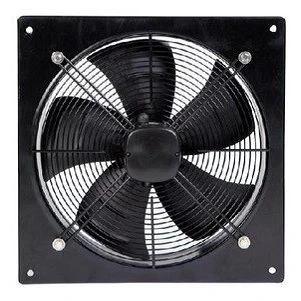
First off, let’s talk about what people usually call “regular fans.” You know the ones: the box fan on your bedroom floor, the ceiling fan that spins lazily overhead, the tower fan that cools you down on a summer night. These are all technically centrifugal fans or axial fans, depending on their design, but for everyday use, fans are about one main thing: moving a lot of air, pretty gently, over a large area. The key here is pressure. Fans move air by spinning blades that push air straight along the axis of the blade (that’s axial fans, like ceiling fans) or slightly off-center, but they don’t generate much force. I test this all the time in my shop: if you stand 10 feet away from a box fan, you barely feel a breeze, and if you put a thin sheet of cardboard in front of it, it just flutters a little—no way it’s going to push that cardboard hard enough to move it an inch.
What makes a fan a fan, not something else, is its pressure-to-volume ratio. Fans are built to move high volumes of air at low static pressure. Static pressure is just the force air exerts when it’s moving against something, right? So if you’ve got a long duct or a bunch of obstacles in the air path, low static pressure means fans can’t push air through that. They’re made for open, unobstructed spaces. That’s why ceiling fans work great in your living room where there’s nothing blocking the air, but if you try to use a ceiling fan to push air through a 20-foot-long duct to a second floor vent? It’ll barely do anything. The air just gets stuck, and you’re wasting electricity.
Now, let’s switch gears to blowers. If fans are the laid-back guys of the air moving world, blowers are the overachievers. Blowers, which are sometimes called squirrel cage blowers (that’s the round, cage-like part you see in HVAC systems), are designed to move air at high static pressure, even when there are obstacles or long paths in the way. Let’s test that same cardboard trick with a blower: hold that same thin cardboard in front of a small HVAC blower, and it’ll push the cardboard hard enough that it almost flies off your hand. That’s the difference in pressure. Blowers can generate way more force because of their design: most have a compact housing, a curved impeller, and a narrow outlet that squeezes air as it exits. That squeezing action is what builds up that high pressure.
Wait, but I’ve seen people call “blowers” things like the leaf blower I use in my shop to clean dust off equipment. Is that the same kind of blower used in HVAC? Yeah, basically—they just have different sizes. The small leaf blower is a centrifugal blower, same as the one in your furnace, just built for shorter, more focused air paths. So when would you reach for a blower instead of a fan? Let’s say you need to move air through a tight, confined space, or push it over a long distance. HVAC systems use blowers to push heated or cooled air through the ducts in your house, right? If they used a regular fan, the air would never make it all the way to the back bedroom. Another example: industrial ventilation in a factory. If you need to pull dust out of a machine and push it through a 50-foot duct to a filter, a fan can’t generate enough pressure to pull that dust through, but a blower can. I’ve had a few manufacturing clients come to me frustrated because they tried using a warehouse fan for that exact job, and their dust levels were still too high—switched to a blower, and they cut their dust levels by 80% almost overnight.
But here’s where things get a little blurry, and why the confusion is so common. A lot of people use “blower” and “fan” interchangeably, and some machines are even sold as “blower-fan” hybrids. That’s why at my shop, we always ask customers a few quick questions to point them in the right direction, instead of just sticking to rigid definitions. Let’s run through those questions right now, because this is the practical stuff that actually matters for your project.
First question: Are you moving air through an open space, or through a confined path with obstacles? If it’s open (like cooling a garage, circulating air in a warehouse, or a desk fan), a standard fan is perfect. It’s cheaper, uses less energy, and does exactly what you need without overdoing it. If it’s a confined path—ductwork, long runs, filters, bends in the air line—you need a blower. That high pressure is non-negotiable here.
Second question: Do you need a gentle breeze over a wide area, or focused force to push air a specific distance? Ceiling fans and box fans are for that wide, gentle flow. Blowers are for when you need air to go where a regular breeze can’t. For example, if you’re drying a wet floor after a flood, a large air mover fan (which is a type of axial fan) will move a lot of air across the floor to evaporate water. But if you need to push air through a pipe to clear out a clogged dust line, you want a blower.
Third question: What’s your energy budget and long-term use? Fans are more energy-efficient for low-pressure, high-volume jobs. Blowers use a bit more energy because they’re working harder to build pressure, so if you don’t need that extra pressure, you’re wasting money. I see this all the time: a small café will buy a heavy-duty blower for their kitchen ventilation, and it’s way too loud and uses more electricity than a small centrifugal fan would have. They ended up paying twice as much for energy over two years, just because they picked the wrong tool.
Another thing that trips people up is sizes. Fans come in all sizes too, right? A tiny USB fan for your laptop is a fan, a 10-foot-diameter industrial fan for a stadium is also a fan. Blowes also come in tiny and huge—like the blowers used in wind turbines, or the big ones in power plant ventilation systems. Size doesn’t make either one, pressure and application do. I once had a customer come in asking for a “small blower” for a portable paint booth. I showed him a tiny centrifugal blower, but he ended up picking a small axial fan instead, because his paint booth only needed to pull air through a short filter, no long duct. He later told me that if I’d tried to sell him the blower, it would’ve been way too much noise and cost for what he needed.
Wait, let’s talk about common misconceptions too. A lot of people think blowers are only for industrial use, but that’s not true. The furnace in your home has a blower, right? That’s how air gets pushed through your vents. Some bathroom exhaust fans are actually blowers too, especially if they’re powerful enough to push air through the wall and through a vent pipe outside. Those quiet bathroom ones you buy at the hardware store? Those are usually fans, because they don’t need a lot of pressure to push air a short distance through a thin vent pipe.
Another myth: Blowers are always louder than fans. That’s partially true, but not always. High-volume, low-pressure (HVLP) blowers are designed to be quiet, perfect for spaces where noise is a problem, like offices or schools. And some large industrial fans are super loud too—those big warehouse fans can be so loud you can barely hear someone talking 10 feet away, even though they’re just low-pressure fans. Noise level has more to do with the design and size than whether it’s a blower or a fan.
Now, why does this matter for you, especially if you’re looking to buy something? Let’s say you’re setting up a warehouse and need ventilation for a storage area. If it’s a wide, open storage space, a big industrial fan is going to be way more cost-effective than a blower. But if you’re storing chemicals that need fumes pulled out through a vent system on the roof, you need a blower to push those fumes up the vent pipe, even against the resistance of the pipe walls. Get that wrong, and fumes will pool in your warehouse, which is a safety hazard and can lead to OSHA violations. Or if you’re a HVAC tech replacing a part, and you order a fan instead of the blower you need, the system will blow weak air, and you’ll have to order another part, costing time and money.
At my Blower Fan supply shop, we don’t just sell parts—we help people figure out what they actually need, no pressure. Last month, a restaurant owner came in panicking because their kitchen ventilation was so bad that grease was building up on the walls, and their line cooks were complaining about the heat. They thought they needed a new blower, but after asking a few questions, we realized their existing ductwork was too short, and they only needed a high-performance centrifugal fan to move more air through the short vent. We installed it, and their grease levels went down, and the cooks were way happier. If we’d sold them a bigger blower, it would’ve been too powerful, wasted energy, and made the kitchen too loud.
So to wrap this up, let’s keep it simple, no fancy definitions: Fans move lots of air gently, for open spaces. Blowers move air with force, to push it through obstacles or long paths. The only time the line blurs is when you’re working on small, specific jobs, and that’s why it’s always good to ask questions when you’re shopping. You don’t want to overspend on a blower you don’t need, or underperform with a fan that can’t get the job done.

If you’re not sure which one is right for your project—whether it’s HVAC, industrial ventilation, warehouse setup, or something else entirely—reach out to us. We don’t push the most expensive model, we help you find the exact thing that fits your needs, on budget. Just get in touch to chat through your requirements, and we’ll point you in the right direction.
EC Blower Fan References:
- HVAC Systems Design Handbook, American Society of Heating, Refrigerating and Air-Conditioning Engineers (ASHRAE)
- Industrial Ventilation: A Manual of Recommended Practice, American Conference of Governmental Industrial Hygienists (ACGIH)
- Fan Engineering: Handbook of Air, Gas, and Vapor Handling, The American Society of Mechanical Engineers (ASME)
- Fundamentals of Fluid Flow, John Wiley & Sons, 2021
Dongguan Shengzhirong Electronics Co., Ltd.
As one of the most professional blower fan manufacturers and suppliers in China, our products have good reputation in the market. Please rest assured to wholesale high quality blower fan made in China here from our factory. Customized orders are welcome.
Address: 6/F, Building 2, No.68, Shunxing 2nd Road, Dajingtou 2nd Industrial Zone, Dalang Town, Dongguan City, Guangdong, China
E-mail: szr_coolingfan@163.com
WebSite: https://www.szrfan.com/
