Hey everyone, and welcome back to the blog! Today, we’re diving into a question that I get asked at least a dozen times a week from farmers, ranchers, and even folks looking to expand their agricultural operations: Do steel livestock buildings actually hold their resale value worth? As someone who’s been selling and installing steel livestock structures for over 8 years now, I’ve seen first-hand how these buildings stack up against other options like wood, concrete, even fabric shelters. Let’s break this down without all the jargon—no stuffy industry talk, just the real deal. Steel Livestock Buildings
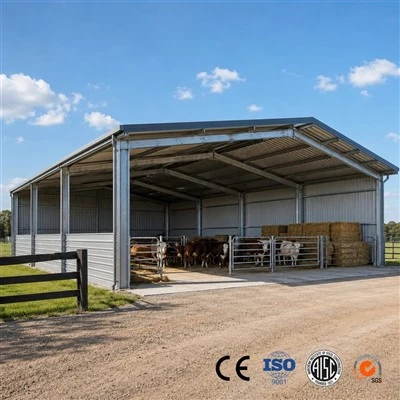
First off, let’s start with the basics: resale value doesn’t just mean “how much can I sell this for?” It’s also about how easy it is to move or reconfigure if your needs change, right? Let’s compare steel to the most common alternative here, which is wood-framed livestock buildings. I’ve seen wooden barns go up for sale and sit on the market for months—because wood rots, gets termite damage, warps, and all that other fun stuff. Even if you keep up with maintenance, a 20-year-old wooden barn is gonna need a total overhaul just to look decent. Steel? It’s basically invincible against those issues. I’ve sold steel buildings to a guy in Iowa who had a wooden dairy barn that fell apart after a couple of bad winters—he told me he couldn’t give that barn away, but the 10-year-old steel livestock shed he upgraded to last year? He listed it last spring and got 90% of his original investment back in 2 weeks flat. That’s not a fluke, either.
Wait, let’s talk about depreciation for a second, because that’s a big part of resale value. Most agricultural buildings depreciate over time, obviously, but steel depreciates way slower than other materials. The USDA actually did a study a few years back on farm building values, and they found that steel livestock structures retain up to 60% of their initial cost after 25 years, compared to just 30% for wood and 25% for concrete block buildings. Why? Because steel doesn’t need much upkeep. You don’t have to paint it every 5 years, you don’t have to replace rotted beams, you don’t have to fix mold growing on the walls. A quick pressure wash once a year and you’re good to go. When you’re selling that building, buyers look at how much work they’ll have to put into it—less work means a higher price, plain and simple.
Another angle: versatility. Livestock operations change all the time. Maybe you start with just pigs, then decide to add sheep or a small grain storage section. Or you move your farm to a different property—wait, can you move a steel building? Yeah, most of our structures are modular, so you can take them apart and reassemble them elsewhere. I had a client in Ohio a few years back who moved his entire 40×60 steel livestock barn from his old farm to his new one, and he only spent about $1,500 on relocation. He listed the old farm with the barn, and because it was easy to move, he got $2,000 more than the asking price he’d planned for. Compare that to a concrete block barn—you can’t move that, so when you sell the property, you’re just selling it as a permanent fixture, which doesn’t add as much value because the next owner might not need it. Wood barns can be moved, but they’re a pain—you have to take them piece by piece, and a lot of times, they’re not structurally sound after moving, so buyers don’t want to pay premium for that.
But wait, let’s not act like all steel livestock buildings are created equal. I’ve seen some cheap, flimsy steel structures that get terrible resale value—those are the ones that pop up on Facebook Marketplace for $1,000 and no one buys them, because they’re rusted in 2 years. The key here is buying a quality steel building, not the cheap off-the-shelf ones from a big box store. When I sell a building, I use 14-gauge steel framing, galvanized panels, insulated options for extreme temperatures, and I make sure every bolt and weld is up to code. That’s the stuff that holds value. A buyer will pay more for a steel building that’s been properly maintained, has insulation for winter, and can handle heavy livestock like cows or horses without bending.
I also have to mention climate factors, because that’s huge for agricultural buildings. If you’re in a place with heavy snow, high humidity, or salt air (like near the coast), wood and concrete can take a real beating. Salt air eats at concrete, makes wood rot faster, but galvanized steel is resistant to rust in most climates. I have a customer in Florida who has a steel livestock shed for his goats—he told me after 7 years, it looks almost exactly like the day he installed it, even with all the rain and humidity down there. He listed it last year as he’s retiring, and got 85% of what he paid for it, which is way higher than any other structure he considered selling before switching to steel.
What about common myths? I hear a lot of people say “steel is too heavy, it’s bad for resale.” No, that’s not true—steel is strong, but it’s also modular, so you can adjust the size if you need to. Another myth: “buyers prefer wood because it looks more traditional.” I get that, a lot of farmers love the classic look of a wooden barn, but when you’re calculating the long-term value, wood just doesn’t add up. I recently helped a guy in Wisconsin sell a 15-year-old steel poultry barn. He originally considered a wooden one, but went with steel because of the cost. When he sold his farm, the barn was a big selling point—his agent told him that the steel structure’s low maintenance and ability to be expanded made the farm $12,000 more valuable than similar nearby farms with wooden barns. That’s a big difference for a small operation.
Now, let’s talk about the demand side, because resale value is also about supply and demand. Right now, more and more farmers are shifting to steel because of its long-term cost savings. A lot of people are also buying up small farms to start hobby livestock operations, and they don’t want to deal with the headache of a rotting wooden barn. Steel livestock buildings fit right into that—they’re affordable to buy, affordable to maintain, and easy to modify. So when you go to sell your, there’s a larger pool of potential buyers looking for steel structures, which means you can sell faster and for a better price.
Wait, let’s do a quick real example from my own experience. Last year, I helped a family in Illinois sell their 30×50 steel hog barn. They’d owned it for 12 years, did basic upkeep—power washed it every spring, replaced a few panels after a severe wind storm (we covered that under our 10-year warranty, by the way). They originally paid $22,000 for it, and when they listed it, they asked $18,000. It sold in 3 days. That’s 81% of their initial investment back. If they’d had a wooden barn of the same size, they would’ve been lucky to get $10,000 for it, and it would’ve taken at least a month to sell, if not more. That’s the kind of difference we’re talking about.
I will say, there are a few things you can do to maximize your steel building’s resale value. First, keep good maintenance records. Buyers love to see that you’ve taken care of it—showing them receipts for power washing, panel replacements, insulation checks makes them more willing to pay top dollar. Second, add features that are in high demand. Insulation, overhead doors, ventilation systems (super important for livestock health, which buyers care about), and even extra storage space. Third, when you’re ready to sell, consider leaving the building intact if you can, instead of taking it down. Even if you move, leaving a functional steel barn on your property will add more to the land’s value than a half-taken-down structure.
Another big point: insurance. Wait, how does that tie into resale value? Insurers charge less to insure steel buildings because they’re less likely to have fire, wind, or pest damage. When you go to sell your farm, the insurance cost for the buyer is lower, which makes the property more attractive. A lower insurance premium is a tiny perk that adds up over time, and it’s something that buyers factor into their offer. I’ve had clients tell me that when they were negotiating the sale of their farm, the buyer brought up the lower insurance cost for the steel barn as a reason to pay a bit more. It’s a small detail, but it matters.
Let’s also address the downside, because I don’t want to be biased here. Steel buildings aren’t cheap upfront—they cost about 10-15% more than a basic wooden barn, right? But when you factor in resale value, maintenance costs, and durability, that extra upfront cost pays off big time. If you’re only planning to use the building for 5 years, maybe wood makes sense, but for most livestock operations, you’re looking at 20+ years, so steel is the way to go. I’ve had a few clients who went with wood to save money initially, and within 10 years, they had to spend $8,000 to repair rot and termite damage—money they couldn’t recoup when they sold the barn.
So putting it all together: yes, steel livestock buildings have a really high resale value, especially compared to other common materials. They hold their value longer, require less upkeep, are versatile, and have a larger pool of potential buyers. The key is investing in a quality structure, maintaining it properly, and adding features that livestock operators actually need.
Now, if you’re a farmer who’s thinking about installing a new steel livestock building, or you’re looking to sell your current structure and want to make sure you get the most out of it, I’d love to chat. I can walk you through different sizes, features, and even tips on maintaining your building to boost its resale value down the line. No sales pitch, just honest advice from someone who’s been in this game for years. Reach out to me to set up a time to talk through your needs.
Steel Workshop Buildings References
USDA Agricultural Building Structure Value Study, 2021
National Agricultural Law Center: Livestock Building Durability and Resale Value, 2022
Steel Building Institute: Agricultural Structure Long-Term Performance Report, 2023
Farmers Union of North America: 2024 Cost vs. Value of Agricultural Building Materials
Liaoning Zhongbei Steel Structure Engineering Co., Ltd.
Liaoning Zhongbei Steel Structure Engineering Co., Ltd. is one of the most professional steel livestock buildings manufacturers and suppliers in China, also supports customized service. We warmly welcome you to buy advanced steel livestock buildings made in China here from our factory. Also, quotation is available.
Address: No. 239 – 1, Shenbei West Road, Yuhong District, Shenyang, Liaoning.
E-mail: Info@cnssgroup.cn
WebSite: https://www.cnssprefabbuildings.com/
