If you’ve ever held a small quadcopter that zipped and darted around your backyard, or operated a compact electric boat that glided smoothly through calm water, you’ve likely interacted with an outrunner brushless motor. But if you’ve ever stopped to wonder how those motors generate the force that moves your gear, you’re not alone. As someone who’s worked directly with outrunner brushless motors for over a decade—first designing custom units for small industrial projects, now as a supplier who helps customers match the right motor to their exact needs—I’ve spent countless hours explaining torque, the unsung hero of any motor’s performance. Let’s break down what outrunner torque actually is, how it works, and why it matters for your application. Outrunner Brushless Motor

First, let’s start with the basics. Torque, in mechanical terms, is a measure of rotational force. Unlike linear force, which moves an object in a straight line, torque is what makes something spin. Think of it this way: if you tighten a bolt with a wrench, torque is the amount of force you apply to the end of the wrench to turn that bolt. For an outrunner brushless motor, that “bolt” is the motor’s rotor, and torque is how hard the motor can spin that rotor (and whatever is attached to it, like a propeller, a gear, or a shaft) to move your system.
Now, what makes an outrunner motor different from other types? The key is in the name: “outrunner” refers to the rotor’s position. In a standard inrunner brushless motor, the magnets sit inside the stator (the stationary part of the motor that holds the copper wire windings), and the output shaft is connected to the stator. In an outrunner, the opposite is true: the magnets are attached to a hollow outer shell (the rotor), and the stator sits inside that shell. That design is game-changing for torque, and it’s why outrunners are the go-to choice for applications that need lots of low-speed rotational force.
Let’s get a little more granular on how that design creates torque. Every brushless motor works on electromagnetic induction: when you run current through the stator’s copper windings, it creates a rotating magnetic field. That field pushes and pulls on the permanent magnets attached to the rotor, making the rotor spin. For an outrunner, the rotor’s larger diameter—since the outer shell spins, it has a bigger radius than an inrunner’s inner rotor—means that the force from the magnetic field is applied further from the motor’s center. Physics 101 tells us that torque equals force multiplied by the radius at which that force is applied. So even if an outrunner and an inrunner have the same strength magnets and same total magnetic force, the outrunner will produce more torque, just because its radius is larger. That’s why outrunners spin slower and have more pulling power, while inrunners spin faster with less torque—perfect for different jobs.
But torque isn’t a one-size-fits-all number. As a supplier, I tell customers that torque is typically measured in two ways: static torque and dynamic torque. Static torque is the maximum amount of torque a motor can produce when it’s not spinning (like when a propeller is held completely still, so the motor has to fight against the prop’s resistance to turn). Dynamic torque is the torque the motor produces when it’s actually spinning at a given speed, which is the number you care about for real-world use. Another key metric related to torque is torque constant, written as Kt. Kt is the amount of torque a motor produces per unit of current (usually measured in Newton-meters per Amp, or Nm/A). For outrunners, Kt is much higher than for inrunners, which is why they generate so much torque from lower currents. That efficiency is huge for battery-powered applications, because it means you get more pulling power without draining your battery as fast.
Now, let’s talk about how to calculate or understand the torque of a specific outrunner motor. It’s not just guesswork—there are a few core factors that determine an outrunner’s torque output. The first is the number of stator poles and rotor magnets. More poles mean the magnetic field can interact with more magnets at once, which increases the total torque. Most outrunner motors have between 12 and 48 poles and magnets; higher pole counts are better for low-speed torque, which is why you’ll see 32-pole or 48-pole outrunners in heavy-lift quadcopters or electric trolling motors. The second factor is the diameter of the rotor we mentioned earlier. A larger rotor diameter doesn’t just make more torque from a design standpoint—it also lets you use larger, stronger magnets, which add more magnetic force to push the rotor. Third is the size of the stator windings. Thicker copper wire in the stator means the motor can handle higher current, and more current flowing through the windings creates a stronger magnetic field, which translates to more torque. That’s why a big industrial outrunner with thick windings will have more torque than a small hobby outrunner—though you don’t want to use a motor that’s too big, because that would add unnecessary weight and cost to your system.
I’ve seen this play out hundreds of times with customers. A few years back, a customer reached out to me looking for an outrunner for an electric boat trolling motor. They’d tried a standard 1000W outrunner from a big-name brand, but it couldn’t push their 15-foot fishing boat at a steady 5 mph, even at full throttle. When we ran the numbers, that motor had a Kt of around 0.1 Nm/A, but what they actually needed was a motor with a Kt of 0.25 Nm/A to get enough torque to move their boat at that speed. We supplied them a custom 180mm outrunner with a 32-pole design and thicker stator windings, and it worked perfectly—they got the low-speed torque they needed, and their battery life improved by 20% because the motor didn’t have to work as hard. That’s the kind of problem-solving I do every day, and it all comes back to understanding torque.
Another common question I get is how torque relates to motor power and speed. A lot of people mix these up, so let’s clear that up. Power (measured in Watts) equals torque multiplied by rotational speed (in RPM), divided by a constant. So if you have two motors with the same power, one can have high torque and low speed, while the other has low torque and high speed. Outrunners are the high-torque, low-speed side of that equation, which is why they’re used for applications that need to move heavy loads at moderate speeds. For example, a heavy-lift quadcopter needs high torque to spin large propellers fast enough to lift 10 or 20 pounds, and outrunners are perfect for that because they generate that torque without needing a gearbox (gears add weight and friction, which is bad for small electric systems). A gearless outrunner is more efficient, too, which is another big plus.
Wait, but what about when you use a propeller with an outrunner? That’s a key point for hobbyists and small UAV operators, because propeller size directly affects how much torque the motor needs to produce. A larger, wider propeller will create more drag, so the motor has to generate more torque to spin it. If you pair an outrunner with a propeller that’s too big, the motor will draw too much current, overheat, and burn out. If you pair it with a propeller that’s too small, you’re wasting the motor’s torque capacity, because it’s not using all the power it can produce. As a supplier, I always give customers a propeller torque chart to match to their motor, so they get the right balance. For example, a 280mm outrunner typically pairs with a 10×4.5 prop, while a 450mm industrial outrunner would use a 24×10 prop—each sized to match the motor’s torque output.
Let’s also touch on efficiency, because torque plays a huge role in how efficient an outrunner is. The most efficient torque range for any motor is when it’s operating at around 70-80% of its maximum torque. That’s where the magnetic field is working at its most effective, with minimal energy lost to heat or friction. If you run a motor at too low a torque (like a small motor moving a very light load), it’s inefficient, because it’s wasting energy on overcoming its own internal resistance. If you run it at too high a torque (like overloading it to lift a weight heavier than it’s designed for), it will overheat and fail quickly. That’s why matching your motor’s torque rating to your actual load is so important. I’ve had customers send back motors because they burned out, and 9 times out of 10, it was because they were using a motor with too low a torque rating for their application, not because the motor was defective.
Now, let’s talk about factors that affect torque beyond the motor itself. The first is voltage. Brushless motors run on DC voltage, and increasing the voltage increases the motor’s RPM, which in turn affects dynamic torque. For example, if you have a 24V outrunner, running it at 36V will make it spin faster, so its dynamic torque at a given speed will be higher—though you have to make sure your motor’s ESC (electronic speed controller) is rated for that higher voltage. The second factor is the ESC and battery. The ESC controls how much current flows to the motor, so an ESC that can supply more current will let the motor produce more torque. The battery’s discharge rate is also important—if your battery can’t supply enough current, the motor won’t be able to reach its maximum torque. For example, a motor that needs 50A to produce its peak torque will be useless if your battery can only supply 30A.
Let’s wrap this up with a real-world example that ties all this together. Last year, I worked with a customer building a solar-powered water pump for rural communities in Africa. The pump needed to move 10,000 liters of water per hour from a well 20 meters deep, which required a motor that could produce 15 Nm of torque at 500 RPM. We selected a custom 220mm outrunner with a 40-pole design, a Kt of 0.3 Nm/A, and a current rating of 50A. The motor’s large rotor diameter and high pole count gave it the low-speed torque needed to turn the pump impeller, and its efficient design meant it could run directly off a 24V solar panel array without needing extra batteries. The pump has been operating for 12 months with zero issues, and the customer told us it’s the most reliable pump they’ve deployed to date. That’s the power of getting the torque right.
If you’re working on a project that needs an outrunner brushless motor—whether it’s a hobby quadcopter, an electric boat, an industrial pump, or a heavy-lift robot—understanding torque is critical to getting a system that works well, lasts a long time, and doesn’t waste energy. At the end of the day, torque is what makes your motor do the work you need it to do, and outrunner motors are uniquely designed to deliver that torque in an efficient, compact package.
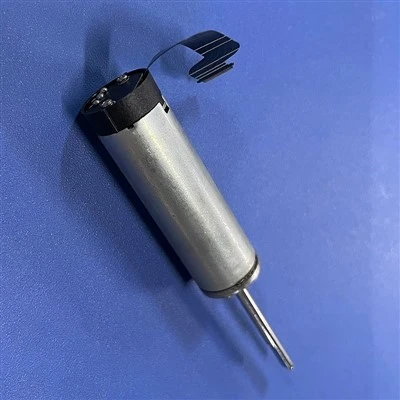
I’ve spent 12 years in this industry, and I’ve seen first-hand how a good torque match can make or break a project. If you’re not sure what torque you need for your application, or if you’re looking for a custom outrunner motor that’s tailored to your exact requirements, I’m here to help. We work with customers across industries, from hobbyists to large industrial firms, and we don’t believe in one-size-fits-all solutions. Let’s talk through your project, figure out your torque needs, and build a motor that works perfectly for you. If you’re reading this and have questions, don’t hesitate to reach out to discuss your specific needs.
Household Appliance Brushless Motor References
- Boldea, I. (2010). Electric Machines: Steady-State Operation and Design. CRC Press.
- Hendricks, R. C., & Fuller, C. R. (2009). Brushless Permanent-Magnet Motor Design. Oxford University Press.
- Qi, X., et al. (2018). Design and Analysis of High-Torque Outrunner Brushless Motors for Low-Speed Applications. IEEE Transactions on Industrial Electronics.
- Miller, T. J. E. (1989). Brushless Permanent-Magnet and Reluctance Motor Drives. Oxford University Press.
- Valenzuela, M. A., et al. (2005). Efficiency Optimization of Variable-Speed Pump Drives Using Induction Motors. IEEE Transactions on Industry Applications.
Shenzhen HengDrive Technologies Co., Ltd.
Shenzhen HengDrive Technologies Co., Ltd. is one of the most professional outrunner brushless motor manufacturers and suppliers in China, specialized in providing high quality customized service. We warmly welcome you to buy the newest outrunner brushless motor in stock here from our factory.
Address: Building A & F, FuNing Hi-Tech Park, XinTian Road, FuHai Street, BaoAn District, ShenZhen, GuangDong Province, China.
E-mail: Marketing001@hengdrive.com
WebSite: https://www.hengdrivemotor.com/
