Hey there! I’m a supplier of fin forming machines, and today I wanna chat about a really interesting question: Can a fin forming machine produce fins with high – density patterns? Fin Forming Machine

Let’s start by understanding what high – density fin patterns are. High – density fin patterns mean that there are a large number of fins packed closely together in a given area. These patterns are super important in many industries, especially in heat exchangers. In heat exchangers, high – density fin patterns can significantly increase the surface area available for heat transfer. The more surface area, the better the heat can be transferred between fluids, whether it’s air – to – water, air – to – refrigerant, or other combinations.
Now, let’s talk about the capabilities of fin forming machines. Modern fin forming machines are pretty amazing pieces of technology. They’re designed to handle a wide range of fin materials, including aluminum, copper, and stainless steel. And they can form fins in various shapes and sizes.
Most fin forming machines work by feeding a strip of metal through a series of rollers and dies. These rollers and dies shape the metal into the desired fin profile. The process is highly precise, and the machines can be adjusted to create different fin heights, thicknesses, and pitches.
So, can they produce high – density fin patterns? The answer is a big yes! But there are a few factors that come into play.
First up is the machine’s design. A well – designed fin forming machine has to have the right set of rollers and dies. The rollers need to be able to apply the right amount of pressure to form the fins accurately, especially when dealing with high – density patterns. The dies also need to be precisely machined to create the fine details of the high – density fins. For example, if the dies are not made with high precision, the fins might not be formed correctly, leading to uneven patterns or even damaged fins.
Another factor is the speed of the machine. When producing high – density fin patterns, the machine needs to run at an appropriate speed. If it runs too fast, the fins might not be formed properly. The metal might not have enough time to take on the desired shape, resulting in fins that are misshapen or have rough edges. On the other hand, if the machine runs too slow, it can be a waste of time and energy, and it might not be cost – effective for large – scale production.
The material being used also matters a lot. Different metals have different properties, such as ductility and hardness. Aluminum, for instance, is a popular choice for fins because it’s lightweight and has good heat transfer properties. It’s also relatively easy to form into high – density patterns. Copper, on the other hand, is more ductile but also more expensive. Stainless steel is very strong and corrosion – resistant, but it can be a bit more challenging to form high – density patterns due to its hardness.
Let’s take a look at some real – world examples. In the automotive industry, heat exchangers are used in radiators and air – conditioning systems. These heat exchangers often require high – density fin patterns to maximize heat transfer. Our fin forming machines have been used by many automotive manufacturers to produce these high – density fins. The machines can create fins with very small pitches, sometimes as small as a few millimeters, which allows for a high number of fins per unit area.
In the HVAC (Heating, Ventilation, and Air Conditioning) industry, high – density fin patterns are also crucial. HVAC systems need to transfer heat efficiently to maintain comfortable indoor temperatures. Our fin forming machines can produce fins that are used in evaporators and condensers, which are key components of HVAC systems. These fins are designed to have a high surface area to improve heat transfer performance.
One of the challenges when producing high – density fin patterns is the risk of fin clogging. When the fins are packed so closely together, there’s a chance that debris or dirt can get trapped between them. This can reduce the efficiency of the heat exchanger. To address this issue, our fin forming machines are designed to create fins with a smooth surface finish. The smooth surface helps to prevent debris from sticking to the fins, and it also makes it easier to clean the fins if necessary.
We also offer some additional features on our fin forming machines to enhance the production of high – density fin patterns. For example, some of our machines have automatic lubrication systems. These systems apply a small amount of lubricant to the metal strip as it’s being formed. The lubricant helps to reduce friction between the metal and the rollers and dies, which can improve the quality of the fin formation. It also helps to extend the life of the rollers and dies by reducing wear and tear.
Another feature is the ability to adjust the fin pitch and height on the fly. This means that operators can change the fin pattern without having to stop the machine and make major adjustments. This is really useful when producing different types of fins for different applications.
Now, I know you might be thinking about the cost. Producing high – density fin patterns with a fin forming machine does require some investment. But the long – term benefits are definitely worth it. High – density fin patterns can improve the performance of heat exchangers, which can lead to energy savings and reduced operating costs. And our fin forming machines are designed to be cost – effective in the long run. They have a high level of reliability and require minimal maintenance, which means you’ll save money on repairs and downtime.
If you’re in the business of manufacturing heat exchangers or other products that require high – density fin patterns, I highly recommend considering our fin forming machines. We’ve got a team of experts who can help you choose the right machine for your specific needs. Whether you’re a small – scale manufacturer or a large – scale industrial operation, we’ve got a solution for you.
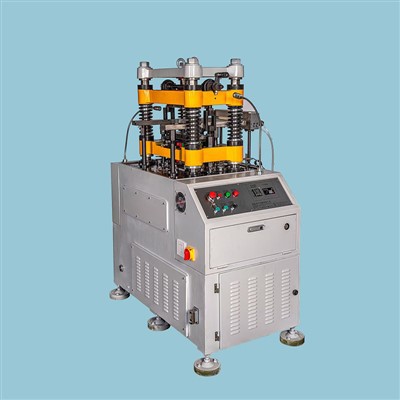
If you’re interested in learning more about our fin forming machines and how they can produce high – density fin patterns, don’t hesitate to get in touch. We’re always happy to have a chat and answer any questions you might have. You can reach out to us to start a conversation about your fin production requirements. We’re looking forward to working with you to take your fin production to the next level.
Fin Forming Machine References
- "Heat Exchanger Design Handbook" by K. A. Gardner
- "Manufacturing Processes for Engineering Materials" by S. Kalpakjian and S. R. Schmid
Suichang Lvye Machinery Co., Ltd.
We are one of the most professional fin forming machine manufacturers in China, also support customized service with low price. We warmly welcome you to buy discount fin forming machine for sale here from our factory. If you have any enquiry about quotation, please feel free to email us.
Address: No. 402, Mudanting East Road, Miaogao Street, Suichang County, Lishui City, Zhejiang Province
E-mail: L528753@outlook.com
WebSite: https://www.suichanglvye.com/
