Hey there! I’m a supplier of Reflective Holographic Gratings, and today I wanna chat about whether these cool gadgets can be used in biomedical imaging. Reflective Holographic Gratings

Let’s start by understanding what reflective holographic gratings are. These are optical elements that are made using holographic techniques. They basically use interference patterns to diffract light, breaking it up into its component wavelengths. This is super handy in a bunch of optical applications, and the question is, can they find a home in biomedical imaging?
The Basics of Biomedical Imaging
First off, biomedical imaging is all about seeing inside the human body without having to go all "scalpel – slash". There are different types of biomedical imaging techniques like X – rays, MRI (Magnetic Resonance Imaging), ultrasound, and optical imaging. Each has its own pros and cons. X – rays are great for seeing bones, but they use ionizing radiation. MRI gives detailed soft – tissue images but is expensive and time – consuming. Ultrasound is non – invasive and relatively cheap but has limited resolution.
Optical imaging, though, has been getting a lot of attention lately. It uses light to image biological tissues, which is non – ionizing and can provide high – resolution images. And this is where reflective holographic gratings might just fit in.
How Reflective Holographic Gratings Could Fit in Biomedical Imaging
Fluorescence Imaging
Fluorescence imaging is a big deal in biomedical research. It involves using fluorescent dyes or proteins that emit light when excited by a specific wavelength of light. Reflective holographic gratings can be used to separate the excitation light from the emitted fluorescence light. You see, when you shine the excitation light on the sample, you don’t want that light to interfere with the much weaker fluorescence signal.
The grating can diffract the excitation light at a different angle than the fluorescence light, allowing you to separate them easily. This means you can get a clearer, more accurate fluorescence image. In a lab setting, researchers are always looking for ways to improve the signal – to – noise ratio, and using these gratings can be a game – changer.
Spectral Imaging
Spectral imaging is another area where reflective holographic gratings could be really useful. It’s all about capturing the full spectrum of light reflected or emitted by a biological sample. Different biological molecules have different spectral signatures, which means they absorb and emit light at different wavelengths. By analyzing these spectra, you can identify specific molecules and their concentrations in the sample.
The grating can disperse the light from the sample into its different wavelengths, allowing a detector to capture the spectral information. This can be used to detect diseases like cancer, where the spectral signature of cancerous cells is different from normal cells. In fact, early detection of cancer is crucial for successful treatment, and spectral imaging with the help of reflective holographic gratings could potentially save lives.
Endoscopy
Endoscopy is a common medical procedure where a thin, flexible tube with a camera is inserted into the body to examine internal organs. Adding reflective holographic gratings to an endoscope could enhance its imaging capabilities. For example, it could be used to perform spectroscopy inside the body, allowing doctors to analyze the chemical composition of tissues in real – time.
Combined with optical coherence tomography (OCT), which is a technique that provides high – resolution cross – sectional images of biological tissues, the grating could improve the contrast and resolution of the images. This means doctors can get a better look at what’s going on inside the body without having to do invasive surgery.
Challenges and Limitations
Of course, it’s not all sunshine and rainbows. There are some challenges when it comes to using reflective holographic gratings in biomedical imaging.
Biocompatibility
The first major hurdle is biocompatibility. If the grating is going to be used inside the body, like in endoscopy, it needs to be non – toxic and not cause any immune responses. This means careful material selection and surface treatments. Some of the materials used to make the gratings might not be suitable for direct contact with biological tissues, so engineers and scientists need to find ways to make them biocompatible.
Resolution and Sensitivity
In biomedical imaging, high resolution and sensitivity are key. The grating needs to be able to diffract light accurately enough to distinguish between different wavelengths that are very close together. Also, the detector that captures the diffracted light needs to be sensitive enough to pick up the weak signals. Improving these aspects without increasing the cost and complexity of the system is a tough nut to crack.
Integration with Existing Systems
Biomedical imaging systems are already well – established, and integrating reflective holographic gratings into these existing systems can be a challenge. The new technology needs to be compatible with the hardware and software used in these systems. It should also be easy to use for medical professionals who are already familiar with the current imaging techniques.
The Future Outlook
Despite the challenges, the future looks bright for using reflective holographic gratings in biomedical imaging. As technology advances, we’re likely to see improvements in biocompatibility, resolution, and integration.
There’s a lot of ongoing research in this area, and collaborations between optical engineers, biomedical researchers, and medical device manufacturers are on the rise. These partnerships are crucial for developing practical and effective solutions.
In the coming years, we might see more widespread use of reflective holographic gratings in clinical settings. This could lead to more accurate diagnoses, better treatment planning, and ultimately, better patient outcomes.
Why Choose Our Reflective Holographic Gratings
As a supplier of reflective holographic gratings, I can tell you that our products have some great features. We use high – quality materials and advanced manufacturing processes to ensure that our gratings have high diffraction efficiency and excellent spectral performance.
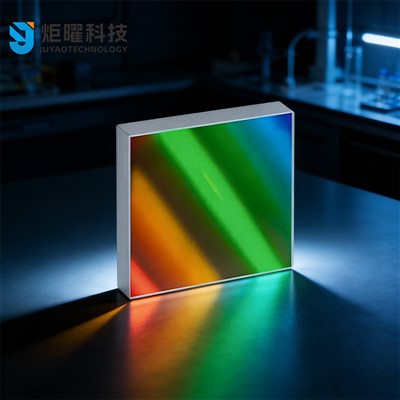
We also offer customization options. Whether you need a grating with a specific groove density, size, or diffraction angle, we can make it for you. Our team of experts is always on hand to provide technical support and answer any questions you might have.
Broadband Infrared Grating If you’re involved in biomedical research or medical device development and are looking for a reliable source of reflective holographic gratings, we’d love to hear from you. We’re confident that our products can help you take your biomedical imaging projects to the next level. So, don’t hesitate to reach out for a chat about procurement and how we can work together.
References
- Smith, J. (2018). Optical Imaging Techniques in Biomedicine. Journal of Biomedical Optics.
- Johnson, A. (2019). Holographic Gratings: Principles and Applications. Optics Today.
- Brown, C. (2020). Challenges in Integrating New Technologies in Biomedical Imaging. Medical Imaging Reviews.
Jilin Juyao Technology Co., Ltd.
As one of the leading reflective holographic gratings manufacturers and suppliers in China, we offer a wide range of products with superior quality. Please feel free to wholesale customized reflective holographic gratings from our factory. Welcome to view our website for more information.
Address: Room 101, No. 2 Huiwen Road, Nanguan District, Changchun City, Jilin Province, China
E-mail: jyoptix@outlook.com
WebSite: https://www.jyoptix.com/
