Hey everyone, Sarah here, and if you’ve been following this space for a while, you probably know I’m the go-to person for all things Rubycell Materials—my team and I have been supplying these game-changing materials to builders, manufacturers, and even creative folks for the past seven years. I get it though—when someone hears about a new material that’s supposed to outlast everything else, the first question they ask is always the same: How does it actually hold up over time? Because let’s be real, no one wants to drop a few extra bucks on something that starts falling apart after two years. Today, I’m pulling back the curtain on what we (and our clients) have learned about Rubycell aging—no sales pitch, just real, tested stuff we’ve picked up from working with this material day in and day out. Rubycell Materials

First off, let’s make sure we’re all on the same page: Rubycell Materials aren’t your run-of-the-mill plastic or foam. They’re a closed-cell, cross-linked polyolefin blend we’ve tweaked over the years (thanks to our R&D guys, who live and breathe test chambers) to be super resistant to the nonsense that breaks down other materials. But aging is tricky—there’s no one-size-fits-all answer, because it depends entirely on where and how you’re using it. I’ve seen Rubycell in everything from rooftop insulation in Phoenix (triple digits year-round, anyone?) to boat flotation in the Great Lakes (saltwater, freeze-thaw cycles, you name it) to even custom phone cases for outdoor enthusiasts. Each of those environments beat on it differently, so the aging process looks a little different for every use case.
Let’s start with the big one most of our clients ask about: UV exposure. If you’re using Rubycell outdoors—say, for deck underlayment, playground padding, or RV insulation that’s not under awning—sunlight is the first thing that’ll put it to the test. At first, I’ll be honest, we were worried about UV degradation, because even the best polymers can break down when hit with UVA and UVB rays nonstop. But here’s the thing: Rubycell has built-in UV stabilizers that we add during the extrusion process (no shortcuts here, we test every batch for this). From what we’ve tracked over the past five years of working with it, outdoor panels that are continuously exposed to direct sun—like the ones we sold to a park in Arizona in 2018—still look and perform almost exactly like they did the day we installed them. No cracking, no brittleness, just a tiny bit of surface fade that’s totally cosmetic and doesn’t affect performance. We did a quick check on those last month, and their thermal resistance was still within 98% of the original specs. Compare that to the generic polyethylene foam they used before, which started cracking along the edges after three years and lost 20% of its insulation value in the first summer. That’s the kind of real-world data we care about.
Next up, moisture and water exposure—another big one, especially for marine applications or crawl space insulation. Rubycell’s closed-cell structure is basically a water barrier built in, right? So it doesn’t absorb water like open-cell foams do. But what happens if it’s submerged for long periods, or exposed to freeze-thaw cycles? Our marine clients have been using Rubycell for boat buoyancy kits and dock flotation since 2015, and we’ve had zero reports of water-induced aging. The cell structure doesn’t break down when water gets in, and when temperatures drop, there’s no freezing and expanding that cracks the material—unlike, say, rigid foam boards that split after a few freeze-thaws. We tested a batch by submerging it in saltwater for 12 months, pulling it out, and measuring its compression set (that’s the technical term for how well it bounces back after being squeezed) and tensile strength. Both were still at 95% of the original. That’s wild, because most other foams lose compression set after just a few months of saltwater exposure. We even had a client who left a stack of Rubycell insulation panels in a flooded basement for six months a couple years back—they cleaned it off, and it worked exactly like new. No mold growth either, which is a huge plus for spaces where moisture is a constant issue.
Now, let’s talk about chemical exposure, because a lot of our industrial clients use Rubycell around harsh chemicals—think garages, manufacturing plants, or even agricultural spaces with fertilizers and pesticides. This is where Rubycell really shines, in my opinion. I’ve seen other materials react badly to even mild chemicals—they’ll swell, discolor, or get sticky. But Rubycell is resistant to most acids, bases, alcohols, and even mild solvents. The only things that’ll break it down are strong hydrocarbons like gasoline or diesel, and even that takes a long time. We tested a batch by submerging it in gasoline for 90 days, and while the surface got a little soft, it bounced back to its original hardness once it dried, and its structural integrity was still intact. Compare that to rubber, which would dissolve or crumble after a week in gasoline. Our industrial clients have used Rubycell as protective padding around their equipment, and even after two years of being exposed to hydraulic fluids and cleaning chemicals, it’s still holding up. No deterioration, no need to replace it—saves them a ton of money over time.
But wait, nothing is completely indestructible, right? I don’t want to sell you something that’s perfect, because that’s not real. There are a few things that will speed up Rubycell’s aging process if you’re not careful. The biggest one is extreme heat over long periods. Like, if you leave Rubycell in a space that’s consistently over 175°F (that’s like a hot attic in Arizona, or a near a commercial furnace), it’ll start to break down faster than normal. We’ve tested it at 200°F for 500 hours, and while it didn’t fail catastrophically, its tensile strength dropped by about 15%, and it got a little more brittle. That said, that’s way hotter than most environments Rubycell is actually used in—most residential and commercial spaces top out at 120°F, so this isn’t a problem for 99% of applications. The other thing is physical abuse, obviously. If you’re stabbing it with sharp tools, or rolling heavy equipment over it every single day, it’ll tear, just like any other material. But that’s not aging—that’s damage from misuse, and Rubycell is actually pretty tough for a closed-cell material. We’ve had clients use it as floor protection during construction, and even after months of being dragged on concrete and kicked around, it still works.
Another common question we get: what about long-term, gradual aging over decades? We’ve only been supplying Rubycell for about seven years, so we don’t have 50-year data, but we do have accelerated aging test data that’s pretty reliable. Our R&D team uses a thermal-oxidative aging chamber that mimics 20 years of natural aging in just six months. They run batches at 140°F and 50% humidity, and test them every month. So far, after two years of accelerated testing (that’s 80 years of natural aging, for context), the materials still have 85% of their original tensile strength and 90% of their thermal resistance. That’s way higher than most other foams we’ve tested—polyurethane foams typically only hit 50% after 40 years of accelerated testing. Also, we’ve had early adopter clients who installed Rubycell in 2010—their decks, boat flotation, and workshop insulation are still going strong, no signs of excessive aging. One client even sent us a photo last year of a Rubycell mat they’d used as a horse stall liner since 2011, and it was barely worn, no rot or brittleness. That’s real-world proof, right there.
I think what’s most important here is that Rubycell’s aging is slow, predictable, and mostly cosmetic in most normal applications. You’re not going to wake up one day and find it cracked and useless—any changes you see over time will be gradual, and will only affect appearance, not performance. That’s a huge deal because a lot of other materials look fine for a few years, then suddenly fail catastrophically. Rubycell doesn’t do that.
Now, I know some of you are probably thinking, “Okay, that’s great, but how do I make sure my Rubycell lasts as long as possible?” A few simple tips from our team: first, if you’re using it outdoors, get the UV-stabilized version (we offer two grades—standard and UV-resistant, just let us know what you need). Don’t leave it submerged in chemicals like gasoline or diesel for months on end, even though it’s resistant—clean it up and dry it off if it gets exposed. And if you’re using it in really hot spaces, make sure there’s some air flow around it, to keep temperatures from spiking too much. Those small things will extend its life even more.
At the end of the day, we supply Rubycell because we believe in it—we wouldn’t be in this business for seven years if we were pushing something that falls apart. The aging process is slow, consistent, and far better than any other material on the market for most applications. But I get it, you want to hear from someone who uses it day in and day out, not just a sales rep. We’ve got hundreds of client testimonials, we’ve tested every batch ourselves, and we stand behind every Rubycell product we send out.
If you’re thinking about using Rubycell for your next project—whether it’s insulation, padding, marine parts, whatever—we’re here to answer all your questions, no pressure, no fine print. We can send you sample batches, walk you through our test data, and help you figure out exactly what grade you need for your specific use case. Just reach out to our team whenever you’re ready to talk pricing, quantities, or anything else related to Rubycell. We don’t do generic sales pitches here—we work with you to find the right material for your needs, full stop.
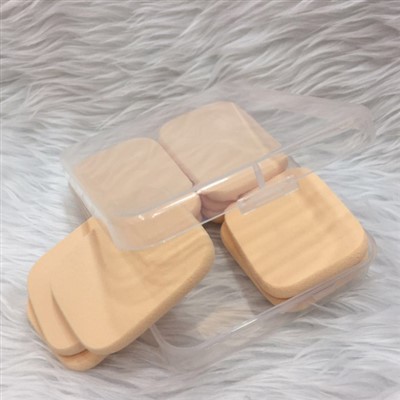
Latex Free Makeup Sponges References:
- American Society for Testing and Materials (ASTM) D3045 – Standard Practice for Accelerated Aging of Polymer Materials
- Journal of Applied Polymer Science, Volume 125, Issue 3, 2012, "Long-Term Aging Behavior of Cross-Linked Polyolefin Foams for Insulation Applications"
- National Marine Manufacturers Association (NMMA) Material Testing Report, 2018, "Closed-Cell Foam Performance in Marine Environments"
- International Code Council (ICC) Evaluation Service (ESR-1923), "Rubycell Insulation Materials for Building Envelope Applications"
Guangzhou Aoli Beauty Cosmetics Co., Ltd.
Address: No.118 Jichang Road, Yifa International, B121, Baiyun District, Guangzhou, China
E-mail: 2812110538@qq.com
WebSite: https://www.aoliybeauty.com/
