Hey everyone, thanks for stopping by my blog. I’m Jake, and I’ve been running a CNC milling supply shop for 12 years now—so I’ve seen first-hand how this stuff works, both the good and the bad. A lot of folks reach out to me these days asking about CNC milling’s environmental impact, and it makes sense: sustainability isn’t just a buzzword for clients anymore. It’s something we all have to care about. Let’s break this down without the jargon, okay? CNC Milling
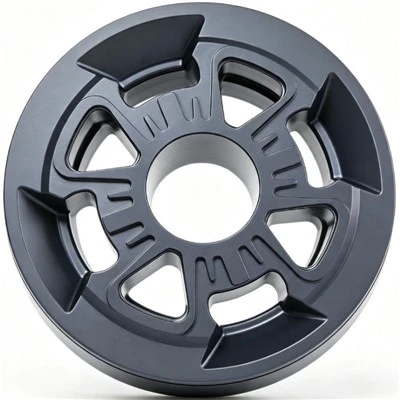
First off, let’s get what CNC milling actually is out of the way for anyone who’s new to it. It’s that automated manufacturing process where a computer controls cutting tools to shape solid materials—metal, plastic, wood, even foam—into precise parts. Instead of a person manually cutting every piece, the machine follows a digital design, which makes it super accurate and way faster than old-school methods. But all that precision and speed doesn’t come without consequences, right?
Let’s start with the big environmental hit most people don’t talk about: material waste. Wait, hear me out. A lot of folks think CNC milling wastes tons of material, and they’re not wrong… but it’s not as simple as that. When you carve a part out of a solid block, you end up with a bunch of “swarf”—the leftover shavings and chips. For metal parts, that swarf is actually recyclable; I send like 90% of our metal swarf back to the foundry to melt down again. The problem is, if you’re using low-quality machines or bad programming, you can end up wasting way more material than you need to. For example, if a programmer doesn’t nest parts properly (meaning they fit as many small parts as possible on a single block), you might be throwing away 30% or more of the material. But here’s the thing: modern CAD/CAM software (the programs that make the CNC machines work) can actually cut down on that waste a lot. We use Fusion 360 at my shop, and it lets us nest parts perfectly, so we get way less leftover. It’s still not zero, but it’s way better than it was 10 years ago.
Then there’s energy use. CNC machines run on electricity, obviously, and big industrial mills can suck up a lot of power—especially if they’re running 24/7. I’ve seen some machines that use 15+ kilowatts per hour when they’re cutting hard stuff like titanium. That’s not nothing, and if your electricity comes from coal or gas, that’s a lot of carbon emissions. But again, this isn’t a fixed thing. We switched to LED lighting around our machines a couple years back, and we added a timer that shuts down all non-essential equipment when the shop closes. Also, a lot of newer CNC machines have energy-saving features: they go into sleep mode when they’re not cutting, and their motors are way more efficient than old ones. Some of our clients who run their mills from solar panels? That’s a game-changer. We’ve had a few small businesses partner with us on solar setups, and their energy footprint for CNC work dropped by like 70%. It’s doable, it just takes choosing the right gear and how you power it.
Next up: cutting fluids. Oh man, this is a big one that I hear a lot of people complain about. CNC mills use coolants (mostly water-based, but some synthetic or oil-based) to keep the cutting tool and the part from overheating. If you don’t use the right coolant, or you dispose of it wrong, it can get into waterways and mess up ecosystems. A lot of older shops just dump old coolant down the drain, which is a huge no-no. But here’s how we handle it: we have a closed-loop system. All our used coolant goes into a tank, we filter out the metal shavings, and then we treat the fluid to get rid of contaminants so we can reuse it—sometimes for months, even a year. We also switched to biodegradable coolants a while back; they’re a bit more expensive, but they break down naturally if there’s a spill, which is way better. And we never, ever dump anything illegally. It’s not just against the rules, it’s stupid for the planet.
Now, the flip side—because CNC milling isn’t all bad for the environment. Let’s talk about precision and reduced waste in the long run. Wait, I know I just talked about material waste, but the accuracy of CNC means you don’t have to make extra parts to account for human error. Old-school manual milling would often have 10% or more parts that are too big or too small, so you’d scrap them. With CNC, we get a first-pass success rate of like 98% at my shop. That means way fewer parts ending up in landfills. Also, a lot of industries that use CNC milling are making products that help the environment. Think about aerospace parts for fuel-efficient planes, or components for solar panels and wind turbines. Those parts have to be super precise, and CNC is the only way to make them right. Without good CNC milling, we couldn’t build those green energy systems that cut down on carbon emissions. It’s a trade-off, right? The CNC process itself has a footprint, but the parts it makes often help offset that.
I should also mention something that a lot of people miss: end-of-life for the parts. CNC milled parts are usually made from durable materials like aluminum, stainless steel, or engineering plastics, which are easy to recycle. If a part breaks, you can melt down the metal and reuse it, or grind up the plastic for new parts. Compare that to 3D printing, for example, where some thermoplastics can be hard to recycle if they’re mixed. Sure, 3D printing is great for small parts, but for high-volume, high-strength parts, CNC is way more recyclable.
Wait, but let’s not sugarcoat the negatives. There are still big issues with the industry. Small shops especially might not have the money to upgrade to energy-efficient machines or closed-loop coolant systems. I see a lot of mom-and-pop CNC places that still use old machines that guzzle power and dump coolant because they can’t afford to replace them. That’s a problem, and it’s something we try to help with—we work with smaller shops to find used, efficient machines that are still in good shape, instead of making them buy brand new. It’s not perfect, but it’s a start.
Another thing: transportation. If you’re a CNC shop that sends parts across the country, all that shipping adds up to carbon emissions. But we’ve solved that for our local clients—we offer local delivery with electric vans, so we’re not burning gas to get parts to them. And for out-of-state clients, we use carriers that have green shipping options, where they offset their emissions by investing in renewable energy projects. Small changes like that add up, you know?
Let me give you a real example from my shop. Last year, we switched all our programming to a software that optimizes cutting paths. Before that, our tool paths were a bit messy, so the tools would rub more than they needed to, which used more energy and wore out tools faster. After the switch, we cut tool wear by 25% and energy use by 18%. That’s not a huge number, but multiply that over 10 machines running every day, and that’s a big drop in our footprint. We also started collecting all our small leftover metal shavings instead of letting them get swept away—we used to lose about 5% of our swarf to shop debris, now we catch almost all of it, so we’re recycling more material too.
I know a lot of people hear “manufacturing” and automatically think it’s bad for the planet. But CNC milling is evolving, and so are the shops that do it. It’s not about stopping CNC milling—it’s about doing it smarter. Choosing the right machines, optimizing your processes, using recyclable materials and coolants, and cutting down on waste wherever you can.
If you’re someone who’s looking for a CNC milling supplier that cares about the environment as much as we do, hit us up. We don’t just talk the sustainability talk—we walk it. Whether you’re a small business needing a couple custom parts or a big company needing high-volume runs, we can work with you to get what you need without leaving a bigger footprint than necessary. Let’s chat, no pressure, and figure out what makes sense for your project.
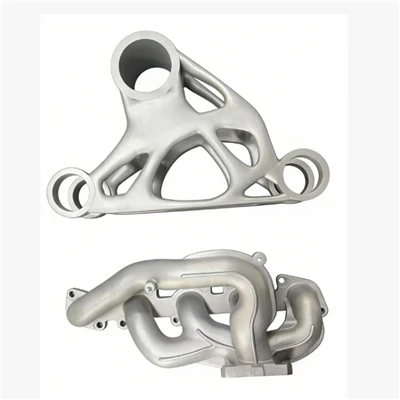
Wait, before I go, let me make sure I didn’t miss anything. Oh right, I talked about the good and the bad, but I wanted to be honest. The environmental impact of CNC milling isn’t one-size-fits-all. It depends on the machine you use, the materials you work with, how you power your shop, and how you handle waste. It’s not a perfect process, but it’s way more sustainable than a lot of other manufacturing methods, especially when you use it to make parts that support green energy.
SLA Printing References:
- International Organization for Standardization. (2021). Sustainable Manufacturing Guidelines for Machining Processes.
- U.S. Department of Energy. (2022). Energy Efficiency in Industrial Machine Tools.
- Society of Manufacturing Engineers. (2020). Life Cycle Assessment of CNC Machining vs. Traditional Manufacturing Methods.
- National Institute of Standards and Technology. (2021). Material Waste Reduction in CNC Programming.
- EPA. (2022). Best Management Practices for Cutting Fluid Recycling and Disposal.
Dongguan Xinchuan Precision Manufacturing Co., Ltd.
As one of the most professional cnc milling manufacturers and suppliers in China, we offer a quick lead time for customized orders. Please feel free to buy precision cnc milling made in China here from our factory. Contact us for quotation.
Address: #16 Gangjian Road, Changping Town, Dongguan City, Guangdong, China. 523000
E-mail: FreeQuote@xcprecision.com
WebSite: https://www.xcprecisions.com/
