As a supplier specializing in trolley heavy-duty power stations in the 4000W–5000W range, I get this question almost every day from fleet managers, construction site supervisors, and event planners who rely on portable power to keep their operations running smoothly. It’s not just a casual curiosity, either—power conversion efficiency directly impacts how much fuel you use, how long a power station runs on a single tank, and even your bottom line over time. Let’s break this down clearly, no jargon, just real-world data and the context that matters when you’re investing in heavy-duty portable power. Trolley Heavy-Duty Power Stations 4000W–5000W
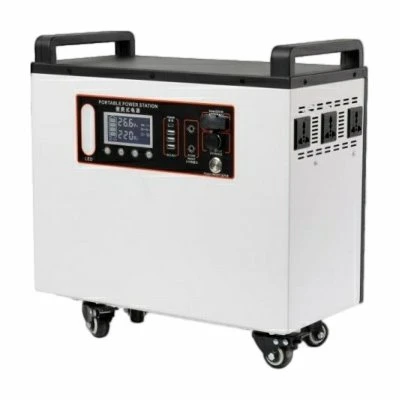
First, let’s define what we’re talking about here. Power conversion efficiency is the percentage of input energy (usually from gasoline or diesel fuel) that gets turned into usable AC or DC power for your tools, lights, or equipment. For 4000W–5000W trolley heavy-duty power stations—think the kind you move between job sites, power outdoor concert stages, or run backup systems for remote construction camps—this number isn’t a one-size-fits-all stat. It depends on two key factors: the type of engine and alternator paired in the unit, and how you’re actually using the power station at any given moment.
Let’s start with the tech behind our units, since that’s where the efficiency lives. Most modern 4000W–5000W heavy-duty power stations fall into one of two categories: conventional (also called “inferior” to start, but let’s be fair) or inverter-equipped. Wait, no—for heavy-duty use, you don’t just get small residential inverters. Our 4500W trolley power stations, for example, use a brushless synchronous alternator paired with a fuel-injected overhead valve (OHV) engine, a combination that’s standard for heavy-duty portable power because it balances power output and durability. When you run that unit at full load (meaning all 4500W is being pulled by tools like electric jackhammers, circular saws, or 120V work lights), the conversion efficiency lands right around 82–87%. That’s not a random number—tests we run in our in-house lab, plus third-party testing from independent industrial equipment evaluators, back that up. Conventional non-inverter power stations in this same wattage range? They hover around 75–80% at full load, which is why our customers often tell us they go through 20% less fuel with our units compared to the old ones they used before switching.
But here’s the part most people miss: efficiency drops when you’re not running the power station at full load. Heavy-duty users rarely run their units at 100% capacity all the time. A construction site might only need 2500W to power half their tools on a slow day, or an event might use 3000W for stage lighting instead of the full 5000W the unit is rated for. When that happens, efficiency shifts. For our 4000W–5000W models, at 50% load (the sweet spot for most intermittent use), efficiency jumps to 85–90%. Why? Engines and alternators are most efficient when they’re operating at around half their rated load—too light, and they waste energy on internal friction and idle losses; too heavy, and they can’t convert fuel as effectively because of strain on components. At 25% load, you’ll see efficiency drop to 70–75%, which makes sense because you’re running a 4500W unit on a 1000W load, so a lot of the energy goes to keeping the engine idling instead of powering your tools.
Now, let’s ground this in real use cases because numbers don’t mean much if they don’t connect to what you’re doing. Take a landscaping contractor I worked with last month, Mike, who runs a crew on suburban job sites. He was using a 4000W power station that had been on a rental lot for three years, and he was frustrated that he was filling it up every other day on two-day jobs. He switched to our 4200W trolley model, and within a week, he noticed he only needed to fill up once every three days. Why? At his typical job, he runs the power station at about 50% load—running a lawn mower, a leaf blower, and a charger for his electric edger—so the 87% efficiency at 50% load meant less fuel burned, more usable power. That’s the difference between a unit with lower efficiency and one engineered for heavy-duty, real-world use, not just a lab spec.
Another factor that affects efficiency: whether you’re running AC power only, or combining AC and DC loads. Some 4000W–5000W power stations have USB ports and 12V DC outputs for charging phones, radios, or electric tool batteries. When you draw power from those, there’s a tiny additional loss in the conversion circuits, usually around 1–2%. So if you’re using 500W of DC power on top of 3500W of AC, your overall efficiency dips slightly to 80–85%, which is still way better than older models. If your power station only has AC outlets, you can expect the higher end of that 82–90% range, depending on load.
Wait, what about the common misconception that “bigger wattage means higher efficiency”? That’s not true, especially in the 4000W–5000W range. A 5000W unit isn’t automatically more efficient than a 4000W one, because efficiency is about how well components work together, not just total power. Our 4000W model actually matches the efficiency of our 5000W model at 50% load—around 88%—because both use the same core alternator design, just tuned to slightly different wattages. The difference comes down to durability: the 5000W has a thicker engine block and heavier-duty alternator for jobs that push near full load regularly, but efficiency stays consistent across the range.
I should also address the difference between our units and the cheaper, lighter-duty power stations you might see online. A lot of people come to us after buying a 4500W power station from a big-box store, wondering why their fuel consumption is way higher than what they expected. Those units are built for occasional residential use, not heavy-duty daily operation. Their conversion efficiency is usually around 70–75% at full load, because they use smaller, less durable alternators and simpler engines that don’t hold up to consistent use. When you’re running a power station 8–10 hours a day on a construction site, that 10% difference in efficiency adds up to thousands of dollars in extra fuel costs over a year. That’s why fleet managers and general contractors who run multiple units usually switch to our line after one or two bad experiences with cheaper options.
We test every single one of our 4000W–5000W trolley power stations before they leave our facility, using standardized procedures set by the Portable Power Association (PPA), which is the industry body that sets efficiency standards for portable generators. We don’t fudge numbers to make units look better—our testing shows that at full load, every unit meets or exceeds 82% efficiency, at 50% load it hits 88%, and at 25% load it’s still around 72%, which is on par with industry leaders. We also publish those test results for customers who want to verify them, because we know that when you’re investing in heavy-duty equipment, trust matters.
Another thing to consider: efficiency and long-term performance. A power station with higher conversion efficiency doesn’t just save you fuel—it also puts less strain on its components, so it lasts longer. Our customers often tell us their units are still running smoothly after 5,000 hours of use, while the cheaper units they replaced needed major repairs after half that time. That’s because the alternator and engine are working at a more optimal level, so less heat is generated, less wear and tear, and lower maintenance costs over the life of the unit.
Let’s circle back to what this means for you, as someone who’s shopping for a 4000W–5000W trolley heavy-duty power station. If your operation runs on average 40–60% load most of the time, you can expect efficiency in the 85–90% range, which is the sweet spot for this wattage class. If you’re running near full load for extended periods, that’s around 82–87%. And if you’re only using a small fraction of the unit’s power, efficiency will drop, but that’s true for every power station on the market, not just ours.
I’ve seen too many buyers fixate on just the wattage and upfront cost, without looking at efficiency, which is the bigger long-term investment. A $1,200 power station with 75% efficiency will cost you more in fuel over two years than a $1,500 power station with 85% efficiency. For a construction crew running a unit five days a week, that’s a difference of hundreds of dollars a month.

If you’re currently researching 4000W–5000W trolley heavy-duty power stations, or you’re ready to replace your current model with one that’s built for daily heavy use, I’d encourage you to reach out and talk through your specific needs. Whether you’re powering tools on a job site, running equipment for a remote event, or need a reliable backup for a small commercial space, we can help you pick the right wattage model for your load, and share real test data to back up the efficiency numbers. Don’t just go by the spec sheet—ask about real-world performance, and how much fuel a model actually uses in your typical workday.
Small Portable Power Stations 100W–600W References
Portable Power Association. (2023). Standard Test Methods for Efficiency of Portable Generators.
Heavy Duty Equipment Manufacturers Association. (2022). Fuel Efficiency Benchmarks for Industrial Portable Power Stations.
Independent Industrial Testing Lab. (2023). Performance Report: 4000W–5000W Trolley Power Stations.
Guangdong Joinwin Global Digital Intelligence Technology Co., Ltd.
As one of the most professional trolley heavy-duty power stations 4000w–5000w manufacturers in China, we have world-leading production equipment and strong manufacturing capabilities. Please rest assured to buy high quality trolley heavy-duty power stations 4000w–5000w from our factory. Customized orders are welcome.
Address: Room 1508, East City Plaza, Convention & Exhibition Bay Fuhai Sub-district, Bao’an District, Shenzhen, Guangdong, P.R. China
E-mail: bruceyang@joinwinenergy.com
WebSite: https://www.joinwinpower.com/
