As a seasoned provider of grain dryer supporting equipment, I’ve witnessed firsthand the crucial role that moisture meters play in the grain drying process. In this blog, I’ll delve into the inner workings of moisture meters within the context of our specialized equipment, offering insights into how they contribute to efficient, high – quality grain drying. Grain Dryer Supporting Equipment

The Basics of Moisture Content in Grains
Before we understand how moisture meters work, it’s essential to grasp why measuring moisture content in grains is so important. Grains such as wheat, corn, and rice naturally contain moisture. The ideal moisture content for long – term storage varies by grain type. For example, wheat is best stored at around 13 – 14% moisture, while corn can be safely stored at 12 – 13%. If grains are stored with too much moisture, they are prone to mold growth, spoilage, and insect infestation. On the other hand, overly dry grains can lead to a loss of weight and nutritional value.
The Role of Moisture Meters in Grain Dryer Systems
In a grain dryer supporting equipment system, moisture meters serve as the eyes and ears, providing real – time data on the moisture levels of the grains. This data is then used to adjust various parameters of the grain dryer, such as temperature, air flow rate, and drying time. By accurately measuring moisture content, we can ensure that grains are dried to the optimal level, thereby preserving their quality and increasing the efficiency of the drying process.
How Moisture Meters Work
Resistance – based Moisture Meters
One of the most common types of moisture meters used in the grain industry is the resistance – based moisture meter. These meters operate on the principle that the electrical resistance of a material (in this case, grains) is inversely proportional to its moisture content.
Inside a resistance – based moisture meter, there are two electrodes. When the meter probes are inserted into the grain sample, an electrical current is passed through the grains between the electrodes. As the moisture content of the grains increases, they become more conductive. This means that the electrical resistance between the electrodes decreases. The meter then measures this change in resistance and converts it into a moisture content reading.
The advantage of resistance – based moisture meters is their simplicity and relatively low cost. They are also quick to use, providing instant readings. However, they can be affected by factors such as the temperature of the grains and the type of grain being measured. Different grains have different electrical properties, so a calibration curve specific to each grain type is required for accurate readings.
Capacitance – based Moisture Meters
Capacitance – based moisture meters work by measuring the dielectric constant of the grains. The dielectric constant is a measure of how well a material can store electrical energy in an electric field. Moisture in grains has a high dielectric constant compared to the dry matter of the grains.
In a capacitance – based moisture meter, a capacitor is used. The grains are placed between the plates of the capacitor. When an electric field is applied to the capacitor, the moisture in the grains affects the electric field, changing the capacitance of the capacitor. The meter measures this change in capacitance and uses it to calculate the moisture content of the grains.
Capacitance – based moisture meters are generally more accurate than resistance – based meters, especially for measuring the average moisture content of a large volume of grains. They are also less affected by the temperature of the grains. However, they are more expensive and may require more frequent calibration.
Near – Infrared (NIR) Moisture Meters
Near – Infrared (NIR) moisture meters are a more advanced type of moisture meter used in the grain industry. These meters work based on the principle that water molecules absorb light at specific wavelengths in the near – infrared region.
An NIR moisture meter emits near – infrared light onto a grain sample. The light is absorbed by the water molecules in the grains, and the amount of light absorbed is proportional to the moisture content of the grains. The meter then measures the intensity of the reflected or transmitted light and uses this information to calculate the moisture content.
NIR moisture meters offer several advantages. They can provide non – destructive and rapid measurements, and they can also measure other properties of the grains, such as protein content, in addition to moisture. However, they are relatively expensive and require regular maintenance and calibration.
Integrating Moisture Meters with Grain Dryer Equipment
In our grain dryer supporting equipment, we ensure seamless integration of moisture meters with the dryer system. The moisture meters are typically installed at strategic points in the drying process. For example, they may be placed at the inlet of the dryer to measure the initial moisture content of the incoming grains, and at the outlet to measure the final moisture content.
The data from the moisture meters is sent to a control system that manages the operation of the grain dryer. If the moisture content of the grains at the inlet is higher than expected, the control system can increase the drying temperature or the air flow rate to ensure that the grains are dried effectively. Conversely, if the moisture content at the outlet is lower than the desired level, the control system can adjust the drying parameters to prevent over – drying.
Benefits of Using Moisture Meters in Grain Drying
Improved Quality
By accurately measuring and controlling the moisture content of the grains, moisture meters help to maintain the quality of the grains. This means that the grains are less likely to spoil during storage, and they retain their nutritional value and marketability.
Increased Efficiency
Moisture meters allow for precise control of the grain drying process, which reduces energy consumption and time. By avoiding over – drying or under – drying, we can optimize the use of resources and increase the throughput of the grain dryer.
Cost Savings
Proper moisture control can lead to significant cost savings. By preventing spoilage, we reduce the loss of grains, which translates into more revenue. Additionally, the energy savings from efficient drying processes can also add up over time.
Conclusion
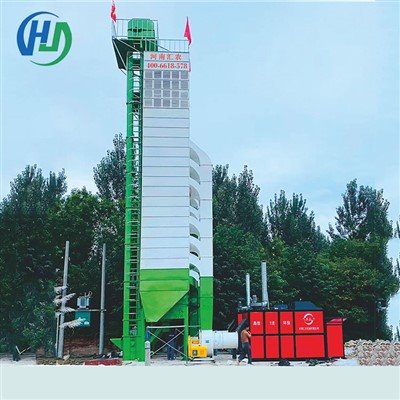
As a provider of grain dryer supporting equipment, I understand the importance of moisture meters in ensuring the success of the grain drying process. Whether it’s a simple resistance – based meter or a high – tech NIR meter, each type of moisture meter has its own advantages and applications. By integrating these meters with our grain dryers, we can offer our customers a comprehensive solution that delivers high – quality, efficient, and cost – effective grain drying.
Clean Peeling Equipment If you’re in the market for reliable grain dryer supporting equipment, including top – of – the – line moisture meters, I encourage you to reach out. Our team of experts is ready to discuss your specific needs and provide you with the best solutions. Contact us today to start a conversation about how we can help you optimize your grain drying operations.
References
- "Grain Drying Handbook", Third Edition, by Gustavus O. Allen.
- "Principles of Cereal Science and Technology", Fourth Edition, edited by Paul E. Rayas – Duarte, et al.
- Research papers on agricultural engineering related to grain moisture measurement and drying technology.
Henan Huinong Machinery Co., Ltd.
Henan Huinong Machinery Co., Ltd. is one of the most professional grain dryer supporting equipment manufacturers and suppliers in China, featured by quality products and low price. Please rest assured to buy discount grain dryer supporting equipment from our factory. We also accept customized orders.
Address: No. 6, Northeast Corner of the Intersection of Renmin Road and Zhujiang Road, New District, Huaxian County, Henan Province
E-mail: frank.tang@huinongmachinery.com
WebSite: https://www.huinongmachinery.com/
