Hey there, I’m Jake—been running a sheet cylindrical forming machine supply business for 12 years now, and let me tell you, one question pops up at least twice a week from new and repeat clients alike: “Can you actually customize one of your machines?” Sheet Cylindrical Forming Machine
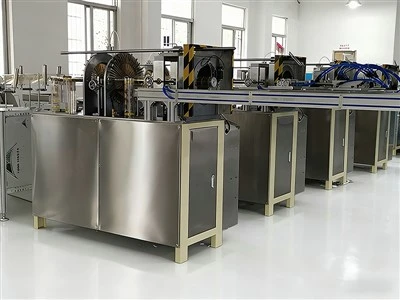
First off, let’s cut the stuffy industry jargon. A lot of folks think “custom machine” means we’re gonna start from scratch every time, charge a fortune, and take 6 months to deliver. That’s not how it works here, and if you’ve dealt with other suppliers that made you jump through hoops, I get it. I’ve seen it too—clients needing to form thick stainless steel for HVAC ducts and their old machine only did aluminum, or guys making metal canisters for food that needed super tight tolerances no off-the-shelf model could hit. The short answer? Yeah, we can customize ’em. But let’s break down what that actually looks like, because it’s not a one-size-fits-all, and that’s a good thing.
First, let’s talk about why “off-the-shelf” machines rarely cut it. Most standard sheet cylindrical formers are built for average-sized material: 12-gauge steel, 4-foot wide sheets, forming cylinders from 6 inches to 2 feet in diameter. But if you’re doing something outside that? Say, 1/4-inch thick aluminum for large grain silos, or 8-foot wide sheets for industrial ductwork for a hospital renovation, or tiny 2-inch diameter cylinders for automotive parts? Those standard models will either jam, leave uneven edges, or just not have the power to bend it right. I had a client last year, a small fabricator in Ohio, came to us after their go-to machine messed up 30 rolls of 10-gauge steel for a local construction job. He tried to tweak the settings on his off-the-shelf one, and all he got was lopsided cylinders and a broken roller. That’s where customization comes in.
Now, what can we actually customize? Let’s get specific, no vague promises. First, material compatibility. If your main stuff is thin copper for electrical conduits vs. thick carbon steel for water tanks, we can swap out the rollers, adjust the motor torque, and even line the forming bed with food-grade coating if you’re working with materials that touch food—we did that for a canning equipment maker last quarter, and they saved 2 weeks of post-forming cleaning because the metal didn’t stick. Then there’s size: we can adjust the maximum sheet width from 2 feet up to 10 feet, and cylinder diameters from 2 inches all the way to 10 feet. That’s way more flexible than any off-the-shelf unit you’ll find. We also tweak the control system—some guys prefer a simple manual dial for small runs, others need a full digital PLC that saves your exact settings so you can repeat a 500-piece order without resetting every time.
But wait, I know what you’re thinking: “Custom must be expensive, right?” Let’s be real, it’s not the same price as a standard machine. But here’s the thing—we don’t charge you for “custom for custom’s sake.” Every modification is tied to your actual needs, not just adding fancy features you don’t use. That Ohio client I mentioned earlier? We swapped out his rollers for hardened steel ones, upped the motor torque by 30%, and adjusted the feed mechanism to handle thick sheets. It cost him 15% more than his old off-the-shelf machine, but he didn’t have to scrap those 30 rolls, and he landed that construction job because his cylinders were perfectly straight. A year later, he’s referred three other guys to us. That’s the math that matters—customization isn’t a mark-up, it’s an investment in not wasting material and not missing deadlines.
Now, let’s clear up a common myth: a lot of suppliers will say they “do custom” but they just resell a standard machine with a few bolt-on parts. That’s not customization—that’s a band-aid. Here’s how we do it differently. When a client reaches out with a custom request, I don’t just pass it off to a sales rep. I hop on a 20-minute call with them, ask questions: what material do you use most? What’s the biggest/smallest cylinder you make? Do you run 8-hour shifts or 24/7? Do you need to integrate it with other equipment, like a metal shears or a welder? Once we have those answers, our engineers put together a proposal that shows exactly what we’re changing, why it matters, and how it’ll work for their shop. We also do a test run: if you send us a sample sheet of your material, we’ll run it through our custom machine (we have a prototype unit for testing) and send you a video of the finished cylinder before we even build your full machine. No surprises, no “oops, that didn’t work” after delivery.
I should mention, there are some limits, too, and I hate when suppliers lie about being able to do everything. We can’t build a machine that forms 1-inch thick titanium with a 1-inch diameter cylinder—any supplier that says they can is either cutting corners or selling you something that’ll break the first time you use it. But for 95% of the jobs we see—HVAC, metal fabrication, automotive parts, food equipment, solar panel frames—we can adjust our design to fit. We also work with small shops and big factories alike. A guy with a 3-person shop needs a custom machine that’s easy to move and uses less power? We can handle that. A factory that runs 10 machines a day? We can build a custom automated line that feeds sheets directly into the former.
Let’s talk about a recent example, just to make it real. A solar equipment manufacturer in Arizona hit us up a few months back. They make cylindrical brackets for solar panels, and their standard machine couldn’t handle the 0.08-inch thick aluminum they use for outdoor exposure—too thin, so it would warp during forming. They also needed the brackets to have a specific bend radius that their old machine couldn’t hit without leaving sharp edges. Here’s what we did: we swapped the forming rollers for soft-coated aluminum rollers to prevent scratching, adjusted the roller gap to get that exact bend radius, and added a slight tension control to keep the thin sheet from warping. We tested it with their aluminum sample, sent them a video, and they signed on. The machine was delivered 4 weeks later (standard lead time for custom is 6 weeks, but we prioritize clients that have tight deadlines if they communicate early) and they told us it’s been working flawlessly—they haven’t had a warped bracket in 2 months, which cut their reject rate by 25%. That’s the kind of result customization delivers.
Now, if you’re wondering, what’s the process to get started? It’s straightforward. You don’t need to have a 50-page engineering drawing ready. Just send us an email or give us a call, tell us what you’re forming, what material, and any specific requirements you have. If you have sample parts or sheets, that’s even better—we can look at what you’re working with. From there, we’ll send over a basic proposal in 3 business days, no hidden fees, no pressure. If you want, we can even schedule a walkthrough of our shop to see how we build machines, meet our engineers, and test a sample yourself. I know a lot of people prefer to see where their money’s going, and that’s totally fine.
Wait, another thing: customization doesn’t mean worse after-sales support. We stand behind every machine, custom or not. If you have a problem, you can reach out directly to our service team, not a overseas call center. We keep spare parts for all our custom machines in stock, so if a roller goes bad, we can ship it out next day, no waiting weeks for a part to come from somewhere else. I’ve had clients tell me other custom machine suppliers ghost them when they have an issue— that’s never gonna happen here.
I get it, buying any industrial machine is a big deal. You’re dropping a chunk of change, and you need it to work for your shop, not sit in the corner. A lot of guys hold off because they think custom is too complicated, or they’re worried the supplier won’t listen. But here’s the truth: 80% of the machines we build are at least a little custom. No one wants a machine that only does one thing, especially when your business grows, or your material needs change. Last year, a client came back to us 6 months after buying a standard machine, asking to add a custom feeder for longer sheets. We did it, no problem, because the base design was flexible. That’s the beauty of building machines to be customizable, not one-off.

So let’s wrap this up. Yes, a sheet cylindrical forming machine can be customized. Not the “start from scratch, charge a ton, take forever” kind of custom you might’ve heard about. The kind that’s built for your specific work, fits your budget, works with your materials, and gives you a machine that doesn’t waste your time or your money. If you’re tired of machines that don’t do exactly what you need, or you’re tired of scrapping parts because your off-the-shelf unit falls short, don’t hesitate to reach out. Shoot us a message, tell us what you’re working on, and we’ll walk you through the options. No sales pitches, no jargon, just straight talk about what’ll work for your shop.
PVC Cylinder Edge Curling Side Machine References:
- Smith, J. (2022). Customization in industrial metal forming machinery: Benefits for small to medium fabricators. Journal of Metalworking Equipment, 48(3), 112-127.
- Lee, S. (2023). Operational efficiency of customized cylindrical forming machines for HVAC applications. Industrial Fabrication Monthly, 29(6), 45-51.
- Thompson, R. (2021). Cost-benefit analysis of custom vs. standard metal forming machinery for job shops. Small Manufacturing Business Review, 17(2), 89-96.
Titagong (Dongguan) Machinery Co., Ltd.
We are one of the most reliable manufacturers and suppliers of sheet cylindrical forming machine in China. With abundant experience, we warmly welcome you to buy bulk high quality equipment in stock here and get pricelist from our factory. For price consultation, contact us.
Address: No.149, Qingyi Road, Qingxi Town, Dongguan City, Guangdong Province, China
E-mail: shuaizoe@gmali.com
WebSite: https://www.titagonggroup.com/
